Read Time: 4 Minutes Subscribe & Share
Beginner’s Luck
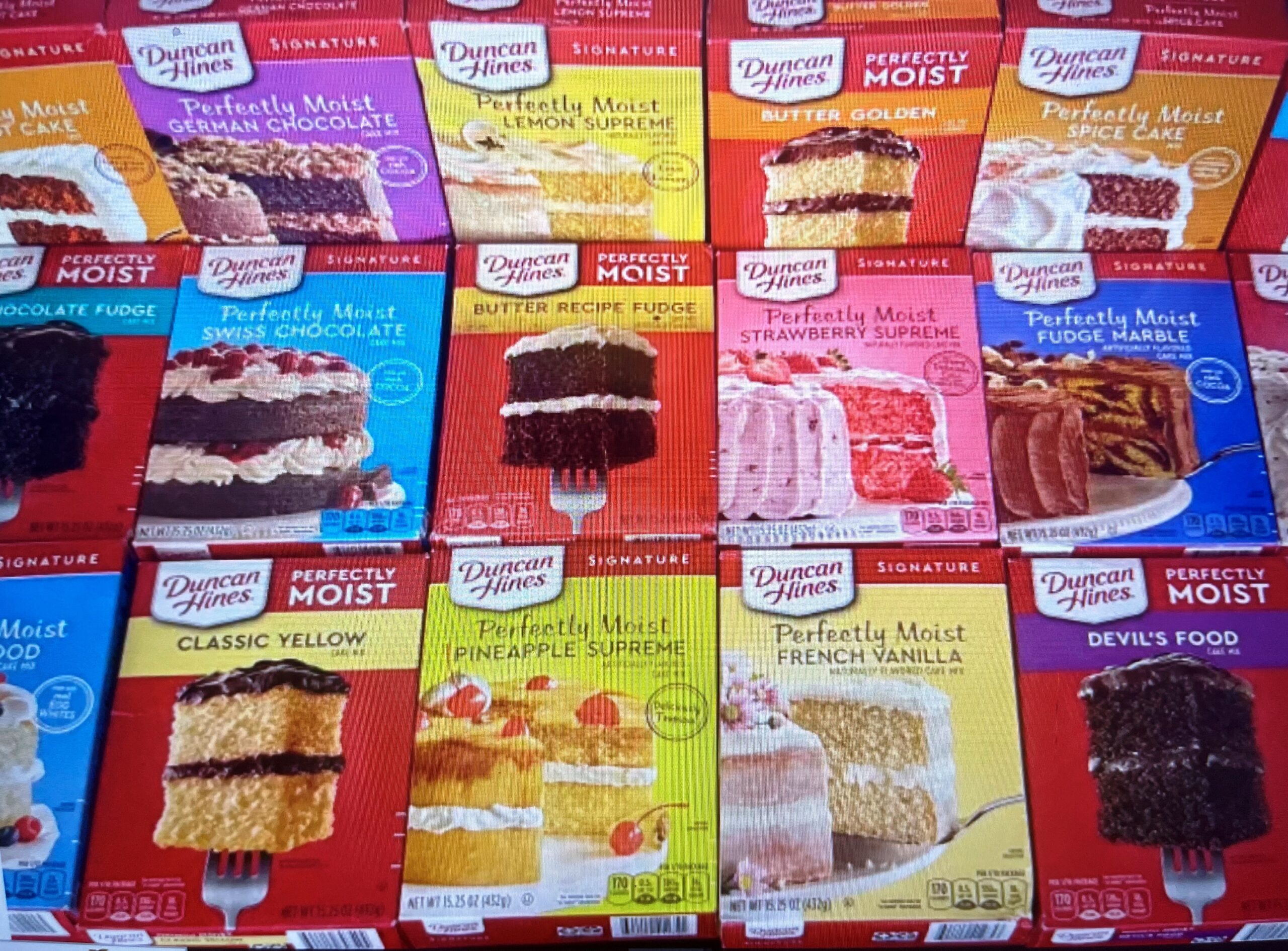 My introduction to the joy of cooking was baking cakes as a pre-teen – meaning I would use cake mixes and probably frosting mixes as well. I remember Duncan Hines as being infinitely superior to the boxes from either Pillsbury or Betty Crocker. The cakes would usually come out of the pan in pieces and I would write “fortunes” on strips of paper and tuck them into the cracks and cover this mess with loads of frosting. My mother would, with a perfectly straight face, serve them to guests at her dinner parties – an act of parental love that I must admit would never occur to me.
I graduated to making recipes for cakes first from the The Joy Of Cooking and later from a book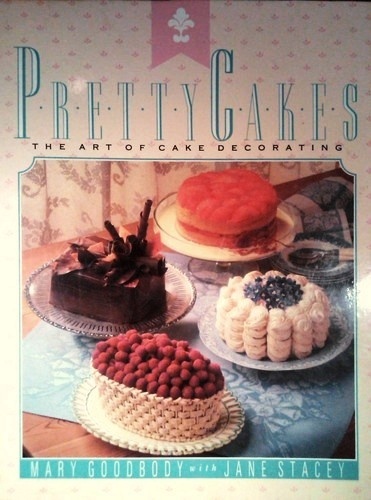 titled Pretty Cakes – published in 1986 by Mary Gooodbody and a best seller for several years in the shop. It too currently resides in one of the 106 boxes in Milan. This book had terrific recipes, both beginner and advanced, plus gorgeous photographs by David Arky. The instructions were clear and d
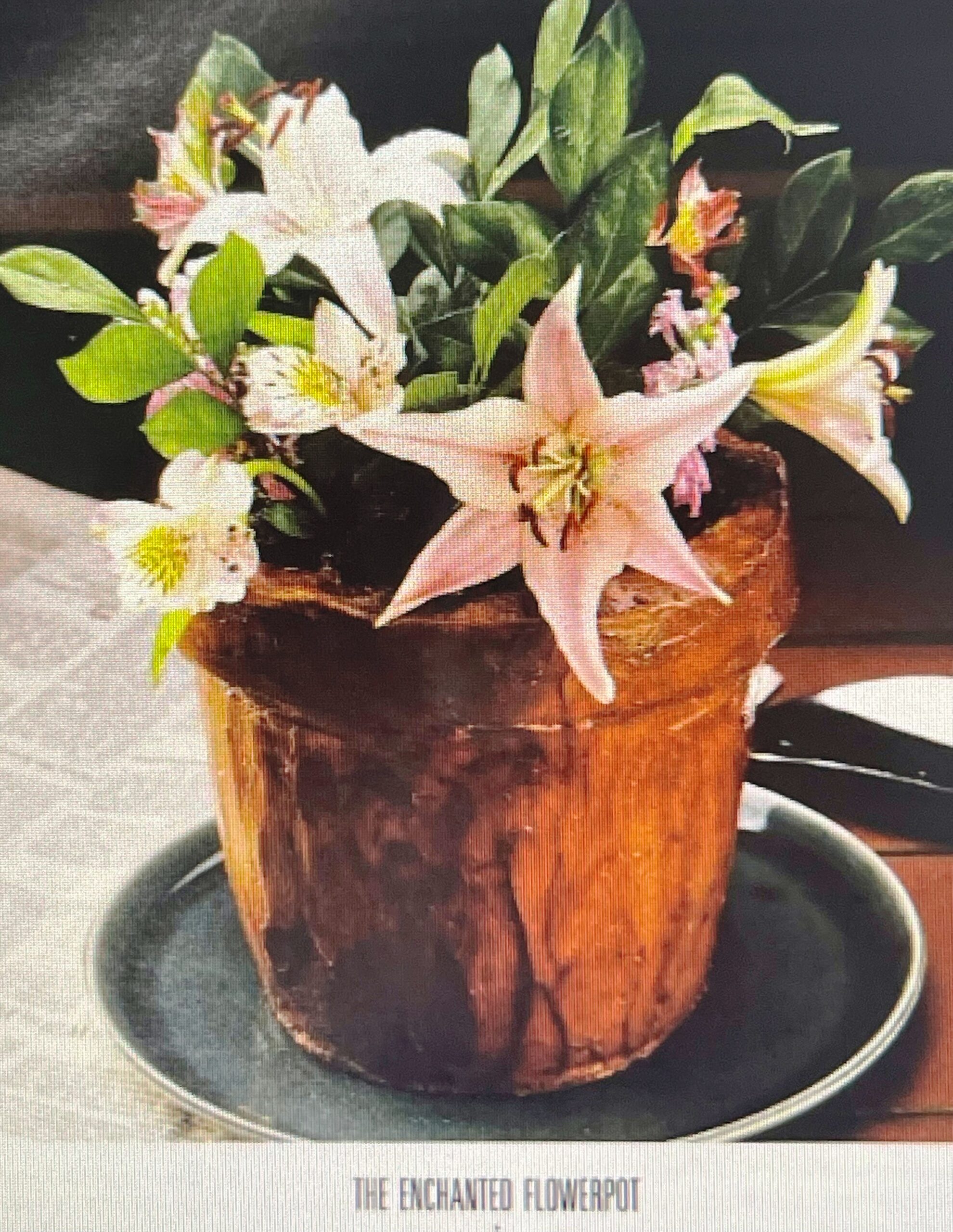 etailed. It was the perfect book to glance through at night to plan a celebration. I made several of these cakes for my daughters’ birthdays and other special occasions. I did have one mishap, however with one chosen by the Italy Insider daughter when she was in elementary school – a flowerpot cake with blossoms with stems in straws “growing” from the top. I was in a hurry and did not wait for the five layers to cool completely, but rather assembled them quickly – only to have them implode as I presented the cake. The next year she pointedly asked for a lowly bakery cake replete with a white frosting made with ingredients I would rather not know about and fluorescent turquoise roses. By the way, you can access Pretty Cakes (as you can with Mapie’s book of French Cuisine) through openlibrary.org
But I did improve and loved to experiment with cake recipes from various cookbooks we sold in the shop. One success was the Queen Anne’s Cake from Camille Glenn; another was the Chocolate Nemesis from London’s River Cafe, and of course several from Maida Heatter’s books.
The Best & the Easiest
However, the best for a children’s birthday party (actually adults too) has to be one that a customer mentioned to me in the shop one day called “ Texas Sheet Cake”. This is definitely a Southern specialty although its origins in Texas are somewhat murky. According to the well annotated Library Of Congress Blogs website, it was recorded in newspapers in Texas as Brownie Cake, Texas Sheet Cake and Mexican Chocolate Cake in the 1960s. It sports pecans sometimes in the batter and sometimes on top of the frosting. Cinnamon occasionally was added too. You used buttermilk in the cake batter and the frosting was always cooked and poured onto the still warm cake.
Because it is normally baked in a generous American half sheet pan (13×18 inches), it became a favorite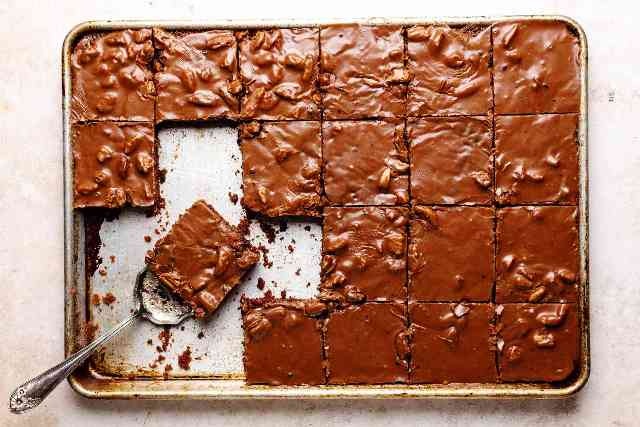 not only for birthday parties, but also at funeral gatherings in the South. Some even think that the term “Texas” for this cake evolved because of its great size. I made two versions with buttermilk before I discovered the recipe from Genevieve Ko in the always-behind-a-paywall New York Times. Although I no longer subscribe to the Old Gray Lady for news, I still pay for a subscription to the cooking section along with Epicurious – one has some great recipes and advice from food writers, the other has the best collection of recipes from the now defunct Gourmet Magazine.
The cake that Genevieve Ko developed needs no clarification or adaptation. I don’t use pecans beause they just get in the way of this scrumptious cake. She said that pecans lose 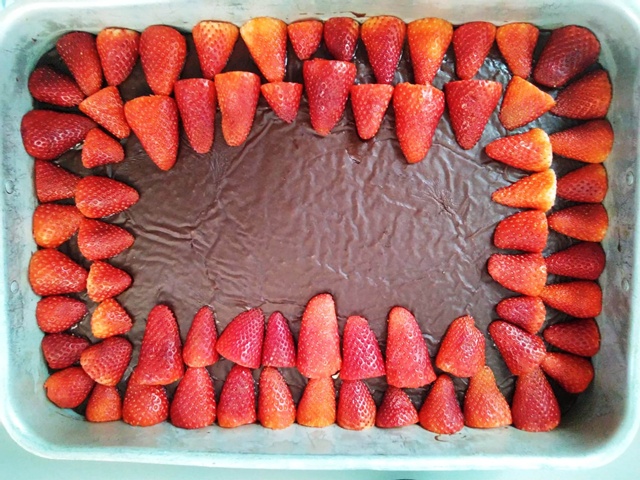 their toasty crispyness in the batter, and after one try, I agree. I made two of these for a grandaughter’s birthday party several years ago and it fed about 40 people. There was none left for breakfast. My Italian-American grandson requests it every year, albeit with a garnish of strawberries. And the first time my daughter made it, two Italian mothers asked for the recipe and one continues to make it for her children to this day. My husband says it is his favorite chocolate cake. (I still like a hard core Nemesis). I have made it in pans smaller than the standard American half sheet, so the layer will be thicker of course (baking time will be a bit longer perhaps, but if you have a Thermoworks testing thermometer you want 200-205F before you pull it out of the oven.)
It is essential to pour the hot frosting onto the warm cake, so mise-en-place is important – have all your frosting ingredients ready to go when you are baking the cake. I think the sour cream gives the cake a richer texture than buttermilk. This cake can be frozen; it can be refrigerated and covered after the party; and it is still good for three or four days. And of course it is perfect for a post-birthday breakfast.
- 1 cup (227gr) unsalted butter, plus more for greasing the pan
- 2 cups (315gr) chopped pecans - I usually do not add these to the frosting
- 2 cups (255gr) all purpose white flour
- 2 cups (400gr) granulated white sugar
- 1 teaspoon baking soda
- 1/2 teaspoon fine sea salt
- 1/3 packed cup (40gr) unsweetened cocoa powder - I use the European alkalized cocoa
- 1 cup hot coffee or hot water
- 1/2 cup (115gr) sour cram
- 2 large eggs beaten
- 1 teaspoon pure vanilla extract
- 3/4 cup (170gr) unsalted butter
- 1/3 cup (40gr) unsweetened cocoa powder
- 1/4 cup (60gr) whole milk
- 1 teaspoon pure vanilla extract
- 2 1/2 cups (360gr) confectioners' sugar
- Heat oven to 350 degrees. Butter a half-sheet pan (13-by-18-by-1-inch).
- Optional - Spread the pecans on a second half-sheet pan and bake until lightly toasted, 7 to 9 minutes.
- In a large bowl, whisk the flour, sugar, baking soda and salt, and make a well in the center.
- In a medium saucepan over medium heat, melt the butter, stirring often.
- Add the cocoa powder and stir well.
- Then add the hot coffee and boil for 30 seconds, stirring continuously.
- Pour the mixture into the well in the dry ingredients, then fold gently just until no traces of flour remain.
- Set saucepan aside without washing.
- Whisk the sour cream, eggs and vanilla in a medium bowl.
- Pour into the chocolate mixture and fold gently until incorporated.
- Pour into the prepared pan and spread evenly.
- Bake until a toothpick inserted in the center comes out with a few crumbs, 18 to 20 minutes.
- Set the pan on a wire rack.
- Right after the cake comes out of the oven, make the icing -Melt the butter in the reserved saucepan over medium heat, stirring often.
- Add the cocoa and stir until smooth and bubbling, then turn off the heat.
- Add the milk, vanilla and confectioners’ sugar, and stir until smooth - It’s OK if there are tiny lumps.
- Pour the warm frosting over the warm cake and spread evenly.
- Optional - sprinkle the toasted pecans all over the top and gently press into the icing.
- Cool completely in the pan on a rack.
- The cake keeps, tightly wrapped, at room temperature for up to 3 days, in the refrigerator for up to 1 week and in the freezer for up to 3 months. If needed, bring to room temperature before serving.
By submitting this form, you are consenting to receive marketing emails from: Kitchen Detail, Via de'Falegnami 5, Bologna, 40121, http://www.lacuisineus.com. You can revoke your consent to receive emails at any time by using the SafeUnsubscribe® link, found at the bottom of every email. Emails are serviced by Constant Contact
Kitchen Detail shares under the radar recipes, explores the art of cooking, the stories behind food, and the tools that bring it all together, while uncovering the social, political, and environmental truths that shape our culinary world.




Nancy, this one looks very good and surprisingly easy once everything is set up.
I’m surprised you use Dutched Cocoa powder instead of high fat cocoa in the batter. Now. I’ve had a hard time finding good high fat cocoa powder lately. Any recommendations?
John,
That’s an interesting subject and I have forgotten the little that I knew about cocoa powder. So you have inspired me to dig deeper!
HI, John and Nancy! With respect to high fat cocoa powder, I have had excellent results from the powders (dutched and natural) at Penzey’s.
Nancy, the cake you’ve featured here looks divine, but T&I are no longer baking big birthday cakes. Alas. But I am going back through your recipe stashes for ideas, and came upon your instructions for ganache. I’m planning to use that for my chocolate shortbread hearts for my Valentines. What are you baking for yours? XO Mary
Ciao Mary,
I was just reading about Penzey’s cocoa powder, which I have never tried and of course their reputation on social issues is so heartening. I probably shouldn’t be making cakes either, but I can’t stop myself. Watching all the Olympic athletes must burn up some virtual calories….I am thinking a roulade for Valentine’s Day…