Sysco Is (Almost) Everywhere
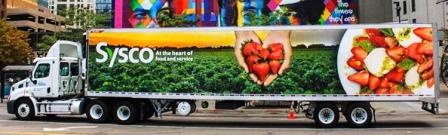
When we were living in the United States, I used to joke that if I saw a Sysco truck idling outside a restaurant, I probably would not want to eat there. In Old Town, in DC, in Bethesda, those trucks were a constant presence: white and monumental, backing into alleyways and double-parked on narrow streets. At first it was just a private joke. Then I began noticing them everywhere: in resort towns, in cities of every size, outside roadside diners and white-tablecloth establishments alike. The trucks were enormous. So, I eventually learned, was the company.
It supplies independent restaurants, national chains, hospitals, schools, and hotels. Obviously, countries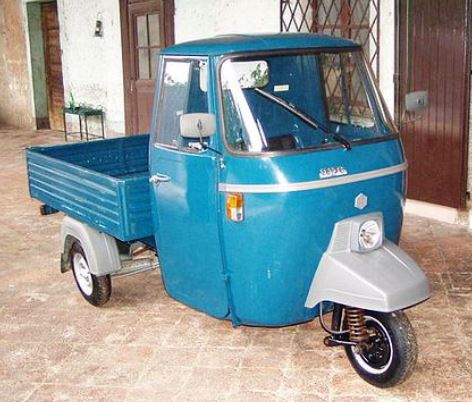 that rely on food exports want to be on its price list. A little research shows that EU food trade associations, including the Italian Trade Agency, are busy courting Sysco to include their countries’ products in its offerings, and who can blame them for trying? As a point of comparison, restaurant purchasing in Italy is much more specialized and regional. You will see deliveries from companies carrying only beef or poultry, seafood, dairy, or produce, in much smaller trucks and even three-wheelers.
There is no broadline monolith here in Italy, no truck dropping off pre-portioned salmon fillets and hand sanitizer. That is the term for suppliers who carry not only food but also disposable utensils, packaging, and cleaning supplies, which the restaurant and retail industries use as a one-stop shop. In general, bars and restaurants, and even schools, which still have kitchens and cooks, tend to use local suppliers, and many restaurant owners and chefs shop at local wholesale markets. But how did Sysco become the largest food-service supplier and, I would argue, help homogenize and worsen dining out across the US?
Acquisition Is the Game
Sysco did not start as a “mom-and-pop” business in a garage, as the legend of Amazon claims is its backstory. Rather, it was the plan of Houston food distributor John Baugh, who merged with two food company owners in 1969, with the goal of buying, or forcing mergers with, competing distributors. Sysco is the well-chosen acronym for Systems & Services Company. By 1977, it had swallowed enough food-distribution players to become the largest commercial food supplier in the United States.
It has worked steadily to optimize service for an industry run on thin margins and irregular employment. John Baugh’s idea of becoming a food supplier with no competition was briefly halted in 2015, when the FTC put a stop to an $8.2 billion merger. Edith Ramirez was the FTC chairperson, and Debbie Feinstein was the lead official calling for the halt. The judge handling the case noted that if the merger went through, Sysco would effectively control 75% of what is termed broadline distribution. Fast forward to 2026: it now delivers food and commercial supplies in ninety countries.
The Walmart Effect
We are all seduced by price points, whether for cars, clothes, or the way we eat. As a nation, we have slowly learned to tolerate shopping from monopolies, where year-round mediocrity, and worse, rules. One reassuring observation is that a small but visible percentage of restaurant owners and chefs shop at farmers markets and small producer fairs, and are slowly building an alternative dining landscape. A more sustainable procurement movement in food service has grown, and there is a small but determined revolution in both farming and the growth of “farm-to-table” or “field-to-fork” restaurants. But the sheer volume and price differential offered by Sysco in food and services are overwhelming. Smaller chains that often support local producers cannot compete on price and, in turn, Sysco forces smaller producers to lower their prices and often pushes them out of business.
A Roll Call of Villains
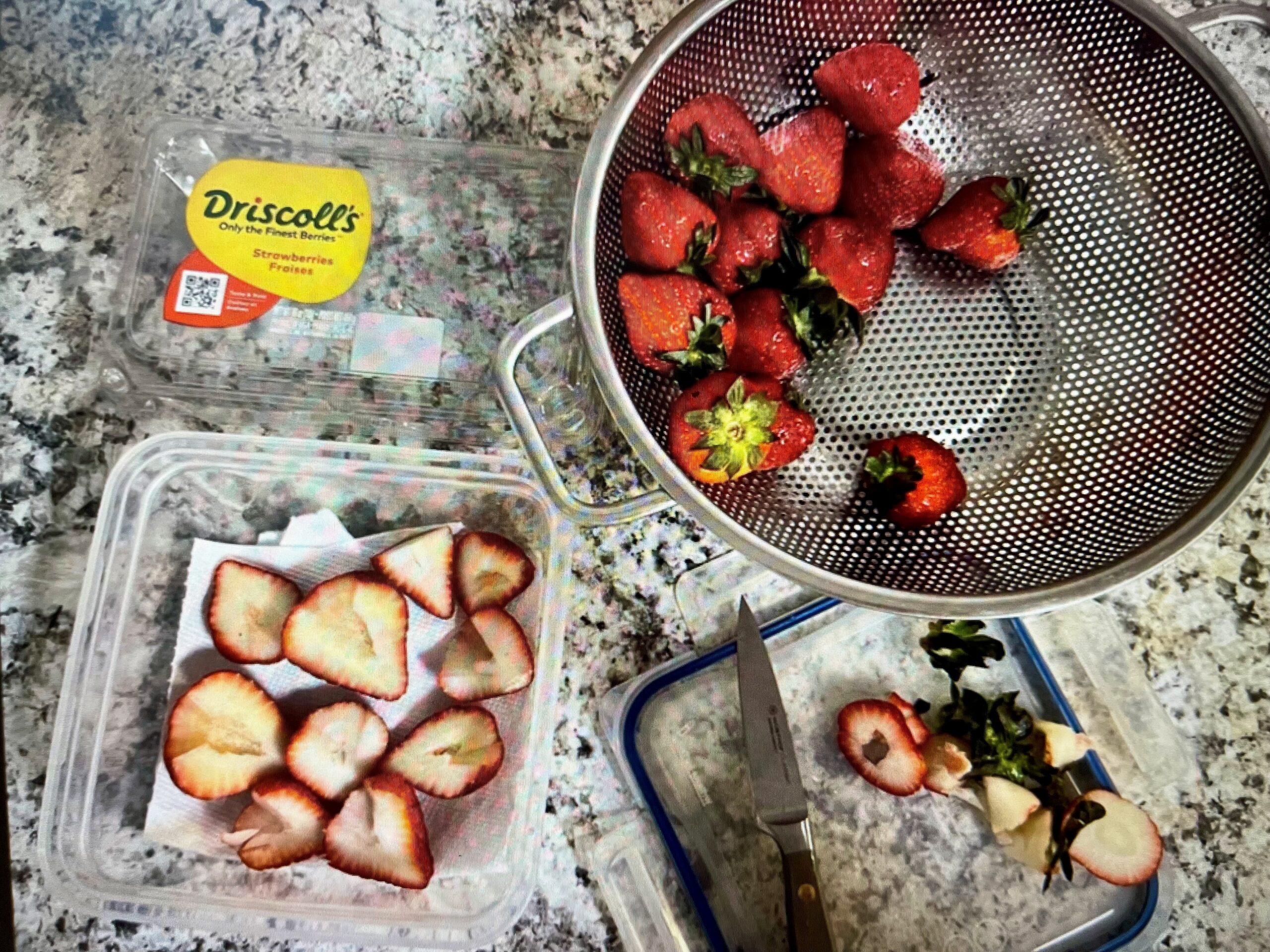 This leads to Sysco’s use of a progressively worse network of companies that rely on exploitative labor and harmful production practices. Driscoll is one easily recognizable example. It was not until Driscoll mass-marketed a berry that normally has two seasons a year that what Seymour Britchky, one of my favorite restaurant reviewers, referred to as “white strawberries” became available to us anytime. I must confess that I used to buy the little monsters, which are huge, and add them to my morning fruit salad. Year-round, in-name-only strawberries with cucumber-like caverns are only one example of the ever-increasing banality of our restaurant menus.
Driscoll is an egregious exploiter of labor in both the US and Mexico. It uses every ruse to have its produce stamped “USDA Organic.” The company lobbied successfully to obtain a federal blessing for labeling organic berries that are grown in plastic without soil. With a wink from local governments, it drains local water supplies and devastates farmland and forests. The only possible irony is that Sysco owns a company called FreshPoint, which promises fruits and vegetables endlessly, and may one day absorb Driscoll.
By prizing the lowest price from fish, meat, poultry, fruit, and vegetable producers, Sysco is an active player in the worst of industrial agricultural practices. Cargill, notorious for exploitative labor and agricultural practices and a leader in CAFOs, is a big supplier to Sysco, as is Tyson, which runs poultry concentration camps. Sysco has also made uniformity the norm: you get the same portioned chicken or steak, the same Caesar salad with croutons, or the same cheesecake with berry topping, wherever you are in the US.
Consumer Choice
The US is a young country, and it has a growing recognition of its regional foods: Jersey tomatoes and corn, apple varieties from Virginia, blue crab from Maryland, to name a few. On a side note, 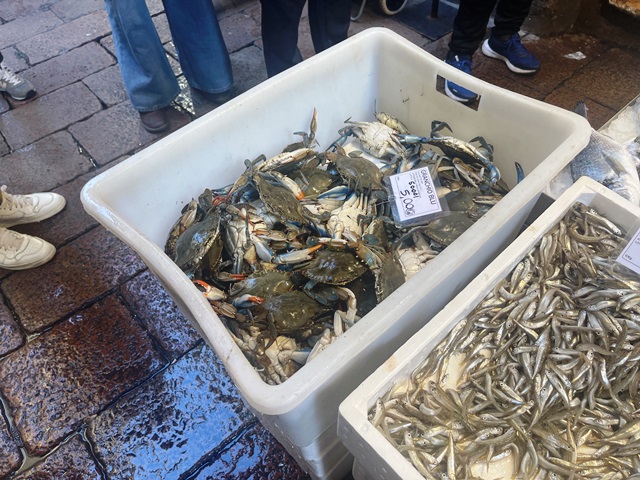 I feel that we could help Italians with the Blue Crab invasion by showing them how to commercially pick those little aliens and sell picked crabmeat for 50 euros a pound. But back to the issue of this post. I noticed various states funding local producers at the international food trade shows I used to attend. In reality, local, small, ethical producers are more costly than Chinese companies that use child and forced labor, or infamous American companies that abuse migrant workers and their families, and those are the supply powers feeding Sysco’s operations.
Your Wallet Talks
As consumers, we hold the power to influence the food industry. Notwithstanding my joke about avoiding restaurants with Sysco trucks outside, our menu choices matter. If there are too many options, “signature” offerings, and even dishes featuring the phrase “home-cooked,” that menu most likely has a strong whiff of Sysco. While restaurants cannot avoid getting some supplies from Sysco, supporting establishments that use local suppliers and producers will collectively make a difference. Avoid chains, admittedly no easy task, and choose independent restaurants. We discovered some lovely ones in immigrant communities, no surprise there. Give the restaurants you like personal feedback, not ranting Yelp reviews. It is a big lift for a family eating out, and even more difficult while traveling, a topic to be explored in another post. We all participated in the devolution of our restaurant choices, and we have a responsibility in shaping their future. It is essential to saving our food culture.

When I think of Sysco, I think industrialized food on all levels. I never used them when I had a food business, and I would NEVER use them as an individual.
Hello Diane,
I applaud your independence! I think it is very difficult for food service businesses to make that decision.
Many, many, years ago I worked in accounts payable at a hospital and I actually paid the Sysco bill. It seemed normal for something that needed that much food/supplies and I think quality may have been different then too – it was the food for the patients and the cafeteria. Now I work in DC at The Wharf and I have to say I don’t think I’ve ever seen a Sysco truck here. Not sure if they have smaller distributors so you can’t tell it’s them and definitely still some large companies but maybe it gives me some hope.
They certainly offer some high quality products, but the main intent is the cheapesst price, regardless of how the item is produced, and they are removing competition, which is never good for the end consumer.