Read Time: 5 Minutes Subscribe & Share
On The Road Again
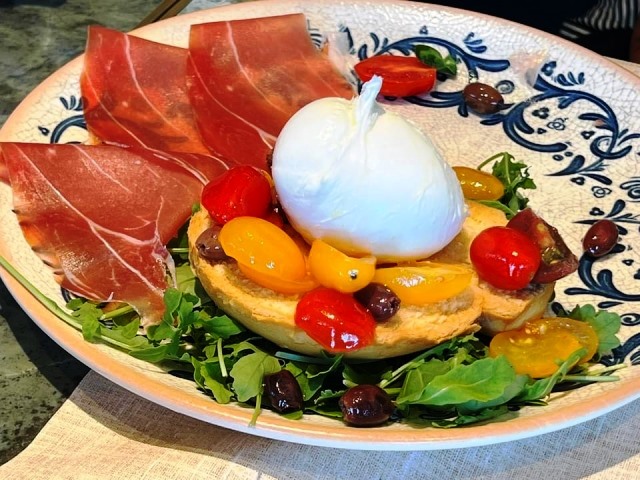 post on the tour of Florence she masterminded with four members of her family:
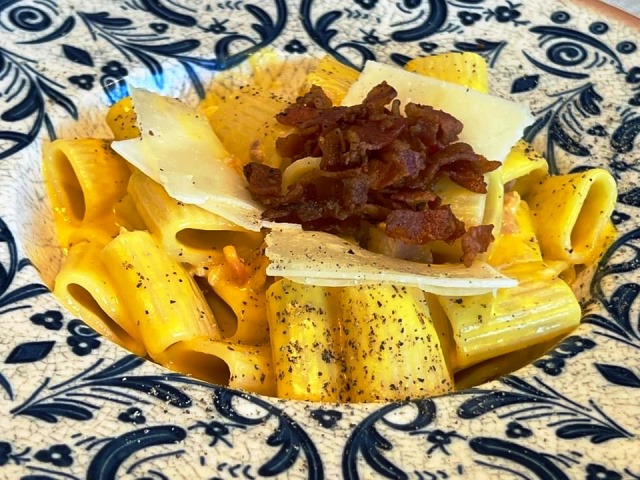 And I thought about our own discovery of the Autogrill when we first travelled in Italy. (And now we always stop at one) Yes, you go through a retail pathway that would be the envy of a Disney tchotchke store – but they actually have some cool travel accessories along with giant baby bottles filled with popcorn and meter-long containers of Oreo-like cookies. The coffee is, of course, excellent. It is, first and foremost, an Italian company. But the sandwiches, the salads and desserts are unfailingly fresh, tasty, good quality…and we always think why can’t we have this on our major highways?
 On The Other Hand
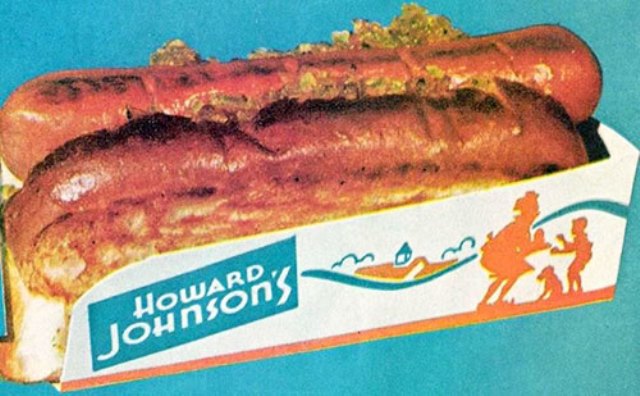 hands. I don’t think it was always this bad. I remember that Howard Johnson’s always had nice food. Even their all-beef frankfurters and signature top-loading hot dog buns were grilled in creamery butter. After all, the founder hired Jacques Pepin and Pierre Franey to create and monitor the meals that were offered on their menus throughout the US. Jacques Pepin goes into great detail in his autobiography about the standards that the eponymous founder maintained. His son diluted the Howard Johnson brand, and the company shriveled into a few independently owned branches before becoming an orange-roofed memory.
Boom Time
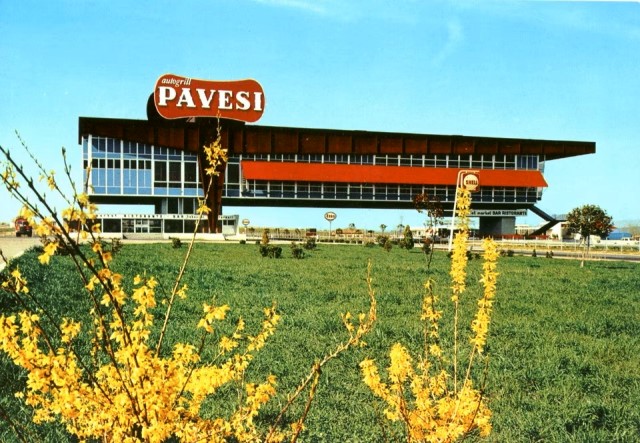 straddling modern design, which made a single restaurant serve both sides of the newly developed autostrada system, and it became the face of today’s Autogrill. This iconic design by Angelo Bianchetti created a roadway show for travelers who could dine, while looking at speeding cars on motorways throughout Italy and later much of Europe. Ironically, in 1959, Bianchetti and Mario Pavesi, who by now had become quite wealthy from the spinoffs of his first little restaurant, traveled to the US to analyze the success of Howard Johnson highway restaurants and an innovative service area design by Pace Associates for the Illinois State Toll Highway Commission. This now-demolished Oasis Service Area birthed their concept of the futuristic glass-paneled Autogrills. They even copied the kitchen layouts of Howard Johnson restaurants.
 Into The Future
Having watched a really good restaurant die an unwanted death at the Frankfurt Airport, with sad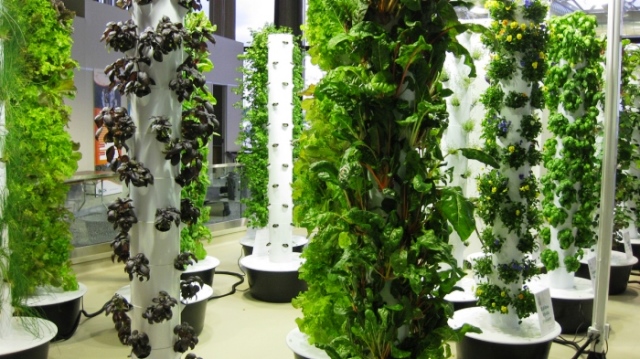 replacements including a horrible German version of an Italian eatery that would be at home at Dulles Airport (with the exception of Vino Volo), I am hoping for Autogrill to wave its magic wand into more airports here as well as in Frankfurt. I even keep hoping to see one on I 95 or The New Jersey turnpike.
The company is a leader not only in promoting decent food at its outposts, but also in promoting sustainability and better labor standards in diverse ways. As a huge corporation, it has joined with 15,000 other companies in the UN Global Compact. This under-the-radar agreement works with these companies to “align strategies and operations with universal principles on human rights, labour, environment and anti-corruption, and take actions that advance social goals.” And although not much is written about this international public and private sector initiative, it includes healthy seed programs for small enterprises, water stewardship, and other technologies 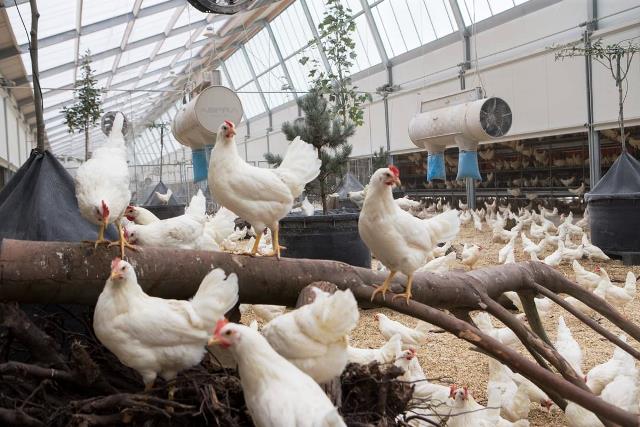 that foster sustainable agricultural and manufacturing processes.
Under the Autogrill umbrella, HMS has invested in Kipster Poultry Farm in the Netherlands, which produces carbon neutral and organic eggs. There is now one in production in the US. Instead of utilizing feed crops, which are themselves a form of waste, Kipster uses feed made from food waste: seed hulls, cracker and bread crumbs, for example. HMS also funds the Urban Garden at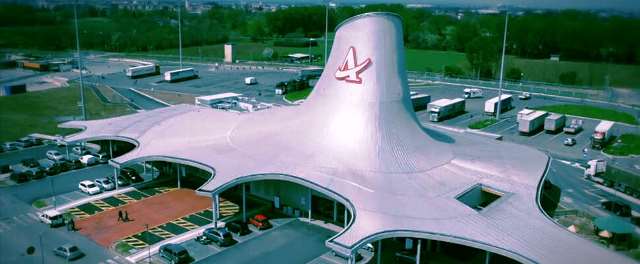 O’Hare airport, with its columns of hydroponic greens that serve as a decorative oasis for passengers and the basis for salads in several restaurants within the terminals.
The redesign of the 65-year-old Autogrill at Villoresi exemplifies how the company has embraced design with more sustainable attributes. The roof captures rain, which is used to water the plants, contribute to the air conditioning, flush the toilets and fill a reserve for a fire emergency. The building, with its volcano-like roof, is engineered with coils and geothermic probes that extract or release heat, depending on the weather. This has lowered its CO2 emissions by 59% and its electricity consumption by 45%. The company utilized, as much as possible, materials from credited sustainable sources.
I wish for all these admirable attributes for roadside dining in the US. But in the short term, I’d settle for a butter-fried all-beef hot dog in a split-top bun.
By submitting this form, you are consenting to receive marketing emails from: Kitchen Detail, Via de'Falegnami 5, Bologna, 40121, http://www.lacuisineus.com. You can revoke your consent to receive emails at any time by using the SafeUnsubscribe® link, found at the bottom of every email. Emails are serviced by Constant Contact
Kitchen Detail shares under the radar recipes, explores the art of cooking, the stories behind food, and the tools that bring it all together, while uncovering the social, political, and environmental truths that shape our culinary world.




Great article.
I visited the first airport Eately in Rome / it opened this past summer- all delicious!!!!
Hello Christine!
So maybe there’s hope for Dulles?!
Nancy