Read Time: 5 Minutes Subscribe & Share
Variable Feasts
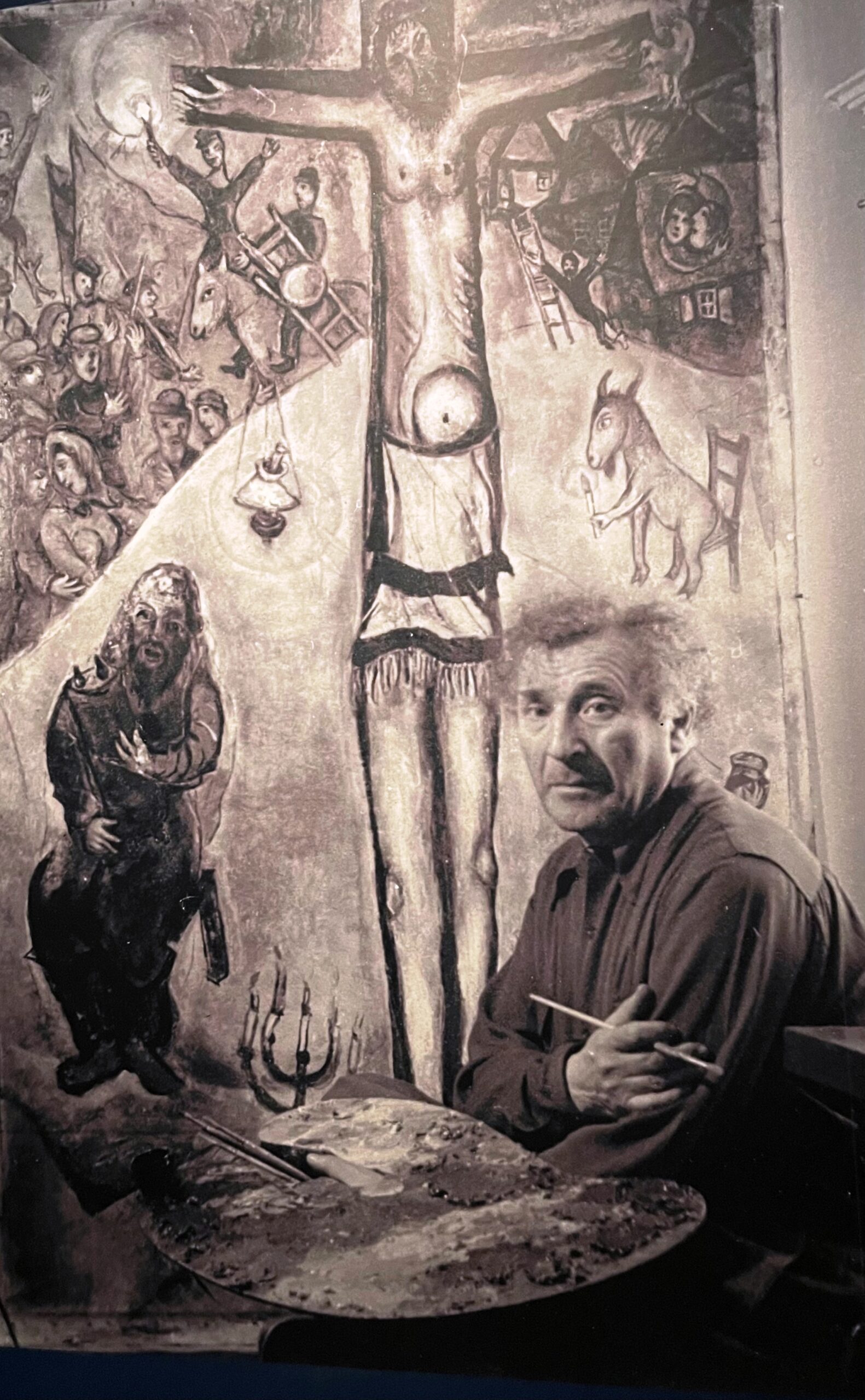 Following up on a mildly controversial post about two restaurants in Bologna – both at the top of their game and each reflecting a different philosophy of serving their clients and of the world we live in. This made me think about cooking as an art form as well as a social expression and not simply a way of fueling the body. While cooking is obviously life-sustaining, human beings need to feed their spirits and protect their inner peace. And so we went to the most extraordinary exhibit of more than 200 works of Marc Chagall in Ferrara and came away feeling as if we consumed a visual feast.
I have seen a few paintings by Marc Chagall in my very limited excursions to museums. The amount of work he produced is astonishing – more than 10,000 pieces over his long lifetime. The man lived and painted actively until the age of 98, when his heart stopped beating while he rode up on the elevator to his apartment in St Paul de Vence. His range was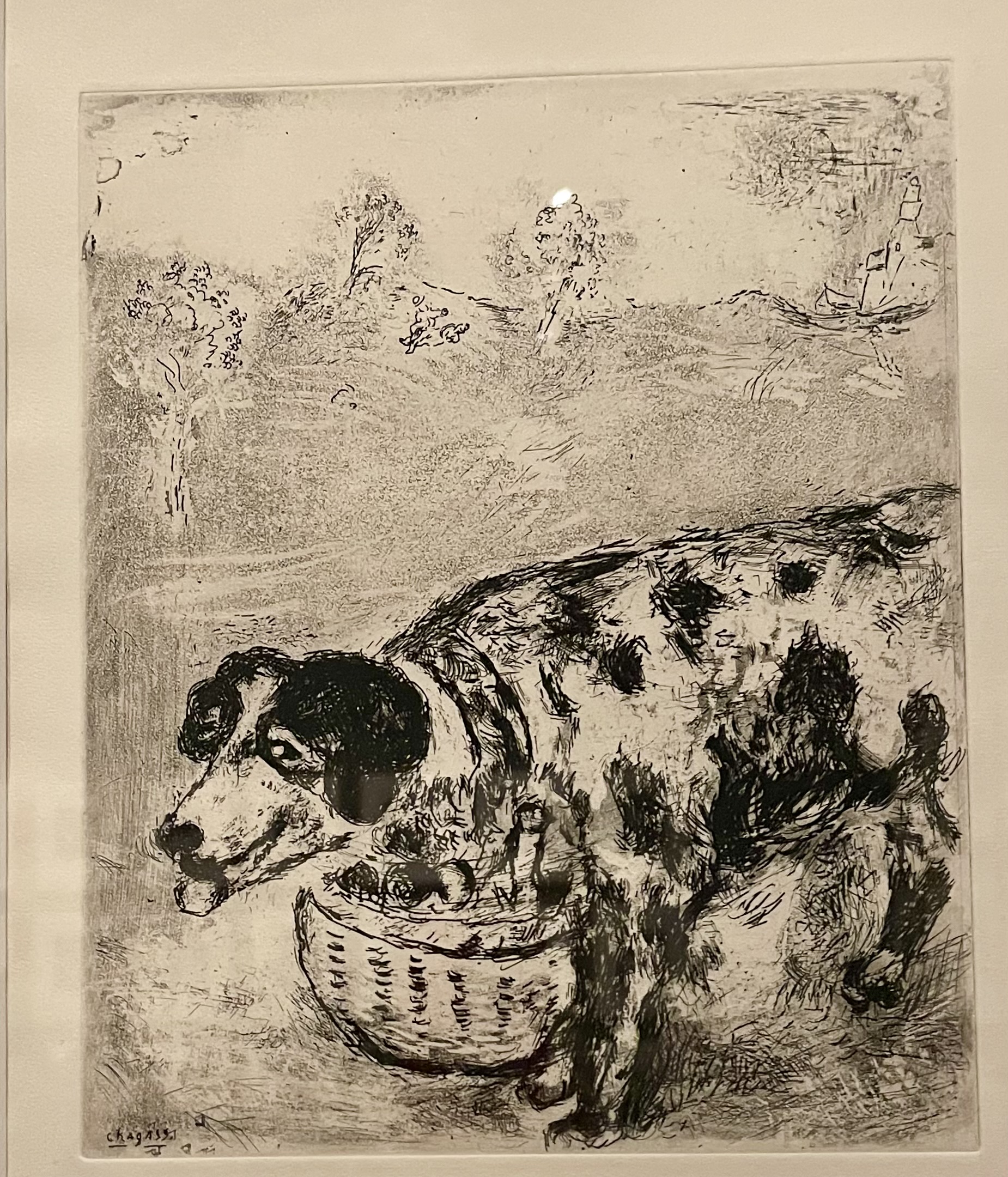 extraordinary – he made travel posters for Nice at the request of its mayor. He designed stained glass windows for cathedrals and academic centers. A publisher in Paris asked him to do illustrations for a book of La Fontaine’s Fables. They are black and white and, although I love the one of the dog carrying a basket of lunch (of course!), this extensive series does not compare with his other works.
He designed and painted backdrops for ballets – and much later for one opera – The Magic Flute. With his wife Bella he fabricated the most fantastical costumes for Firebird, Daphnis and Chloe and Aleko. We once saw a performance at the Kennedy Center in which the New York City Ballet had revitalized his costumes and sets for Firebird. I would love to see a reincarnation of the ballet Aleko, for which he designed both sets and costumes.
Should you visit Los Angeles, 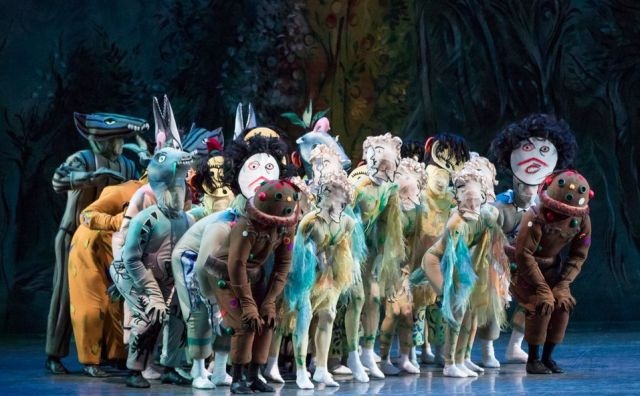 there is a collection of costumes and props by Chagall, at the Los Angeles County Museum of Art or the Victoria & Albert Museum in London – also included are startling pieces designed by Picasso, Braque, Chirico, and Goncharova. Mindboggling, but I have to write that dancing in them required extra care on the part of the dancer! Both museums have images of he costumes in ther daatabases and mount occasional exhibitions. Some of the costumes were saved in the most tionsunlikely ways – some in the trunk of a retired Polish ballet dancer, and some in a theater storage unit in Mexico City where Aleko premiered, for instance.
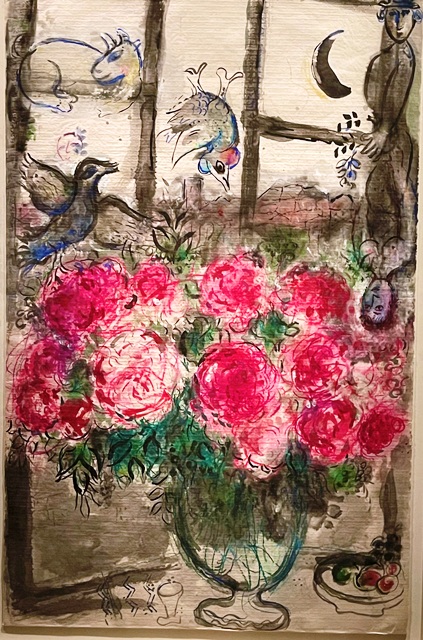 Chagall’s intense use of color (the closest comparison I have ever seen was in the film “Amelie”) was explosive but in a dreamlike context rather than a jarring one. Ironically, he was raised in a strict Hasidic Jewish family, in which creation of images is severely restricted. He actually realized one could draw by watching a classmate making a design on paper. He mixed reality with reveries, so that even in his still life paintings of flowers, the blossoms are jiggling.
Differing Digs
He was married three times, but his first wife, who died of sepsis in 1949, appears floating in many of his works. His memories of his hometown Vitebsk in what is now Belarus is a constant. His life in Paris, which as the proverbial starving artist he treasured, is reflected in joyful splashes of color. I think my grandsons would love knowing that in order to save money on laundry, he used to paint in the nude! They would probably not be as enchanted to know that he surived on small amounts of herring while painting with his new found friends, Diego Rivera, Fernand Leger, and Amedeo Modigliani. And while he happened to be exiled in Paris from his beloved home in what was then the crumbling Russian Empire, he was most despondent when World War II forced him to move to New York City and his paintings often during that period reflect that depression. In fact he never learned English in his six years there.
It took me thirty years to learn bad French, why should I try to learn English
One of the provoking aspects of his paintings is his ability to mix real things, events, buildings into a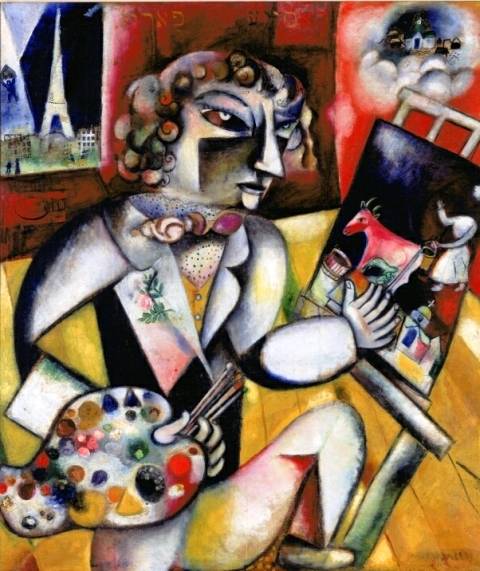 whirl of fantasy and whimsical swirls of color. It took me a long time to realize that he actually had seven fingers on his left (he was also born in 1887 on the 7th day of the 7th month which must have only strengthened his belief in mysticism). You become mesmerized by his world…look at any number of his paintings long enough and you are pulled into them, trying to make sense of everything, or simply be lulled into quiet contemplation.
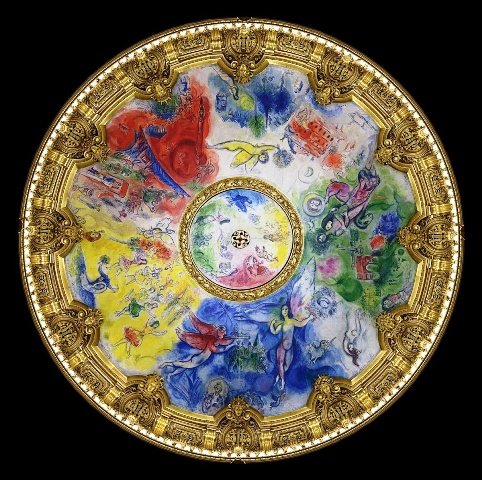 I had never realized until this exhibit (the curating team in Ferrara’s Palazzo dei Diamanti recreated it replete with a light show) that Chagall had painted the ceiling of the Paris Opera. We happened upon his stained glass windows in the Chicago Institute of Art and later were stunned by the ones he had created for the Cathedral at Rheims. We left the Palazzo in the late afternoon with gray skies, intermittent rain, wisps of fog blowing across the small country roads my daughter had chosen to drive through, and all we could think and talk about were Chagall’ s paintings the colors, the animals, the buildings all floating around us as we returned home.
N.B. cllick onto the images to get better detail.
Kitchen Detail shares under the radar recipes, explores the art of cooking, the stories behind food, and the tools that bring it all together, while uncovering the social, political, and environmental truths that shape our culinary world.