
Some Hindsight
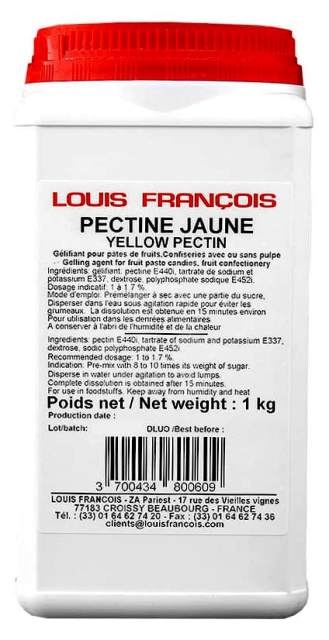 As a culinary store, we sought out unusual ingredients and supplies that were normally available only to professionals, and only in huge amounts. The Cuisinettes would (sometimes unhappily) divide up large bottles of extraordinary French flavoring essences, bags of exotic cocoa powders, and cartons of Italian candied fruits, among other things. I had completely forgotten that we also broke down a certain pectin into smaller amounts for clients who wanted to recreate pâte de fruits and complex fruit fillings. We also carried sheet gelatin—usually the grade labeled silver, more about that later—in more manageable quantities, since it is far more reliable than domestic powdered gelatin.
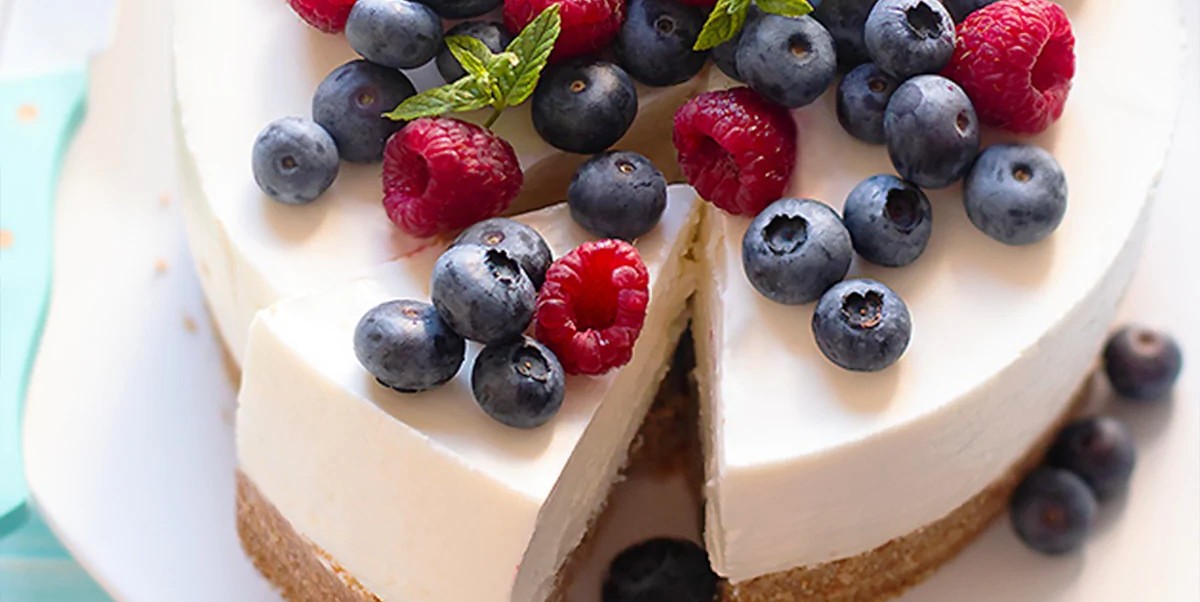
I was reminded of all this recently by a KD reader who had finally run out of her last stash of pectine jaune and wrote to ask if I knew of a source. As it happened, I had just spent a week at a resort hotel with an exceptionally accomplished pastry chef who clearly had a whole arsenal of gelling agents at her disposal. Watching her mirror glazes, Bavarian fillings, and fruit mosaics take shape atop a sturdy pan di Spagna, I realized I needed a refresher course myself. That refresher was reinforced by a shameless binge of Bake Off Italia where contestants lurched from one gelling agent to another in pursuit of the most daunting pastry challenges imaginable.
Starch: The Familiar Workhorse
In the world of pastry, there are basically four agents for thickening liquids into something more solid: starches, agar-agar, gelatin, and pectin. Starches are primarily used as thickeners for sauces, pastry creams, and pie fillings— the starches of wheat, potatoes, corn, and tapioca, tapioca being a particular favorite of my mother’s generation. All of them need to reach a boiling point to do their thickening work.
The other three—agar-agar, gelatin, and pectin—do more than just thicken and can produce jewel-like results.
Agar-Agar: Stiff but Reliable
Agar-agar, which I confess I have never used myself, is extracted from a reddish seaweed. Most of us meet it in school biology labs as the growing medium in Petri dishes. Because it’s plant-based, it’s a staple in vegan and vegetarian pastry and in recipes for followers of Buddhism, Hinduism, Islam, and 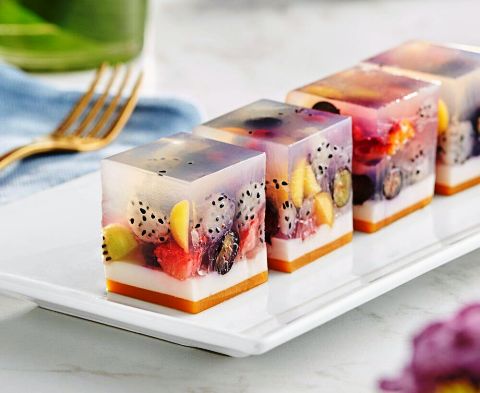 Judaism. Agar-agar is much stronger than gelatin, does not melt at room temperature, and sets quickly—it won’t crack or wrinkle in a display case or in transit. Its drawbacks are a rubbery, sometimes brittle consistency; it’s fibrous, and it can cause digestive issues or affect blood sugar in diabetics.
Depending on the set you want, use 1 to 5 teaspoons of agar-agar powder per 2 cups of liquid—5 teaspoons if you’re after a genuinely hard set. Add it to cool water first, before bringing it to a boil, so it doesn’t clump before reaching setting temperature, and it does need a full rolling boil. After about two minutes at the boil, drop a small amount on a cold plate; it should set within seconds. In fillings made with pineapple or kiwi, agar-agar is the gelling agent of choice, since both fruits contain enzymes that interfere with other setting agents.
Gelatin: Who was Oscar Bloom?
Gelatin, on the other hand, is extracted from animal collagen—sometimes fish or cattle, but most often pigs. Its presence is what prevents things like marshmallows from qualifying as vegetarian, much to the dismay of certain s’mores devotees I know. It melts at body temperature and has a softer, far more pleasant mouthfeel than agar-agar. Powdered gelatin is cheaper to produce than sheet gelatin and has a longer shelf life, but in my own experience, sheet gelatin dissolves more readily and sets up clearer.
Sheet gelatin comes in four strengths: bronze, silver, gold, and platinum. To use it, soak the sheet in cool water for a couple of minutes—this is what “blooming” means, simply hydrating the gelatin (you can cut sheets to get the right weight for a given application). Once softened, squeeze them gently and add them to your liquid preparation, which can be warm but must not be boiling hot. I speak from experience here: add gelatin to a boiling-hot liquid and it loses its setting power entirely, so you don’t have to make that mistake yourself. Once it’s stirred in smoothly, it will need a few hours in the fridge to set.
I was always curious about the term “blooming.” I half expected some poetic connection to flowers—unfolding petals, that sort of thing. Nope. It’s named for Oscar T. Bloom, who patented the method for testing how rigid a gelatin’s final set will be once hydrated. The Bloom scale runs from a soft 30 to a firm 325. Silver sheet gelatin is the workhorse medium-set option, with a Bloom rating around 160; bronze, softer still, is typically used for very soft mousses; gold and platinum, with ratings from roughly 190 to 265, are reserved for hard, clear glazes and showpiece work.
If you’re converting from a standard American envelope of powdered gelatin (normally 7 grams), you can substitute 7 grams of silver sheet gelatin. A common shortcut is 4 sheets of silver, gold, or platinum, keeping in mind that gold and platinum will give you an increasingly firmer set than silver. Bronze is soft enough that 5 sheets are recommended instead.
Pectin, and the Mystery of Pectine Jaune
Which brings us to pectin—and to the mysterious pectine jaune that started all this. Pectin is made from both apples and citrus fruits, fully vetted to satisfy plant-based dietary restrictions. Unlike gelatin, it needs high heat to release its gelling properties, and its behavior splits into two families: low-methoxyl and high-methoxyl (an excellent Scrabble word, by the way).
High-methoxyl pectin needs sugar and acid in the mix to set, and it comes in two formulas: rapid-set and slow-set. Choose rapid-set for jams and preserves where you want pieces of fruit suspended in the mix. Choose slow-set when you want a clear jelly or glaze—the slower set gives trapped air bubbles time to rise and escape, leaving a cleaner finish.
Pectine jaune belongs to this high-methoxyl, slow-set family, and it was developed specifically for pâte de fruits—jellied fruit slices. It can only be heated once; it will not reset if you reheat it, and its gelling is irreversible. That’s precisely why a well-made pâte de fruit won’t melt at normal room temperature—at extreme heat, it simply turns into a sticky mass rather than liquefying. It’s the same pectin behind Spain’s membrillo, the quince paste served with cheese, and it’s what allows a solid fruit filling to survive a trip through a hot oven without dissolving into the surrounding cake or tart.
Low-methoxyl pectin is a different animal altogether and comes in three main variations. Standard LM pectin can be reheated, gives a looser set, and is the choice for sugar-free or low-sugar preserves—though it requires some form of calcium to activate properly. If that’s your goal, Pomona’s Universal Pectin is worth seeking out: it comes with separate packets of pectin powder and calcium powder, so you can dial in the set without relying on sugar to do the work. American packages of pectin for low-sugar recipes come with the calcium mixed in.
So, Where Do You Find Pectine Jaune?
Back to my KD reader’s original question. Pectine jaune isn’t something you’ll find on a supermarket shelf, but it’s not as elusive as it might seem, either. In the U.S., Chef Rubber sells it under the name Pectin Pâte de Fruit (they’ll tell you it’s also called Pectin Yellow or Yellow Pectin, so don’t let the labeling throw you). SOS Chefs in New York carries a citrus version formulated specifically for pâtes de fruits, and L’Épicerie stocks the French Louis François yellow pectin that professional pastry kitchens have relied on for years.
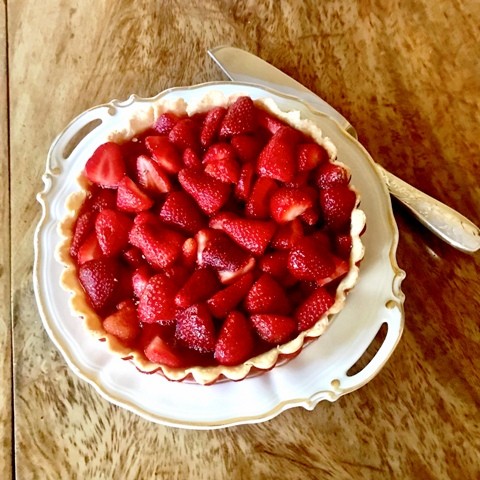
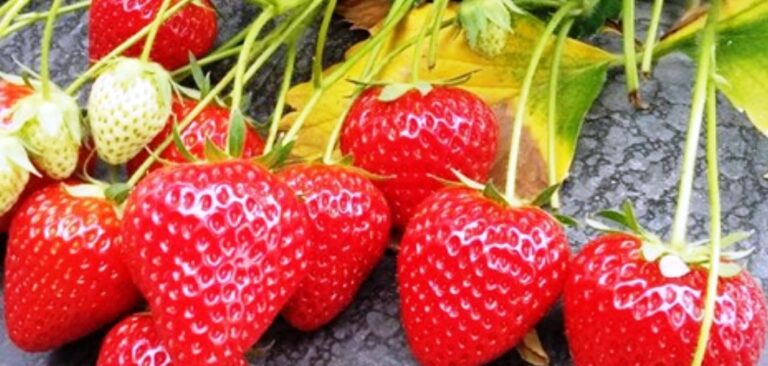
We have finally bought an apartment and so, as soon as I unpack the oft-mentioned 106 boxes, I plan to play with gelatin and pectin again. If there are any strawberries, one of the first things I am going to show off to our Italian neighbors is this American strawberry pie, which uses sheet gelatin. But I also want to make some preserves and mirror-glazed fruit tarts and cakes. I was so inspired by the ones I had for dessert at Il Derby this summer. So I will definitely be experimenting with gelatin and pectin, though I am not so sure about agar-agar.
Comments & Reviews