
Bundles of Joy
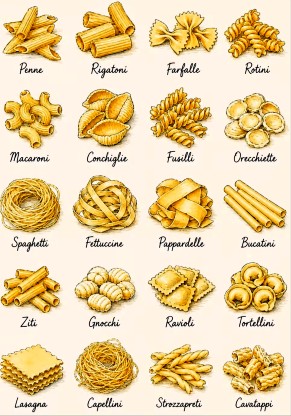 While pasta shapes and fillings reign supreme in Italy, their origins are often linked to Arab influence in Sicily, long before the oft-repeated story of Marco Polo’s return to Italy in 1295 after his 17-year stay in China. Involtini, however, are truly distinctive in Italian cuisine: little bundles of thin slices of vegetable, meat, poultry, or fish wrapped around a filling. They can be sautéed on the stovetop with a sauce made by deglazing and enriching the fats used to brown them, roasted in the oven with a sauce or cheese and breadcrumb toppings, or braised in a stovetop sauce. It is a dish that can go head-to-head with pizza, and you probably already have ingredients for fillings in the leftover containers in your fridge.
In my slow education with butchers, I have learned that the terms braciole and involtini are somewhat interchangeable, depending on where you are in Italy. In the south—Sicily, Calabria, and Campania—braciole usually refers to beef or pork wrapped around stuffings and braised in tomato-based sauces. In northern Italy, though, braciole usually means pork or veal cutlets, at least from what I understand. Since much of the Italian diaspora in the US came from Italy’s southern provinces, you will see the term braciole more frequently in Italian-American cuisine.
While pasta shapes and fillings reign supreme in Italy, their origins are often linked to Arab influence in Sicily, long before the oft-repeated story of Marco Polo’s return to Italy in 1295 after his 17-year stay in China. Involtini, however, are truly distinctive in Italian cuisine: little bundles of thin slices of vegetable, meat, poultry, or fish wrapped around a filling. They can be sautéed on the stovetop with a sauce made by deglazing and enriching the fats used to brown them, roasted in the oven with a sauce or cheese and breadcrumb toppings, or braised in a stovetop sauce. It is a dish that can go head-to-head with pizza, and you probably already have ingredients for fillings in the leftover containers in your fridge.
In my slow education with butchers, I have learned that the terms braciole and involtini are somewhat interchangeable, depending on where you are in Italy. In the south—Sicily, Calabria, and Campania—braciole usually refers to beef or pork wrapped around stuffings and braised in tomato-based sauces. In northern Italy, though, braciole usually means pork or veal cutlets, at least from what I understand. Since much of the Italian diaspora in the US came from Italy’s southern provinces, you will see the term braciole more frequently in Italian-American cuisine.
Wrapping Up
 While oversized zucchini (a particular August joke in the US that does not exist anywhere else, as far as I know) make useful involtino wrappers, eggplant is a richer choice. While it is a no-brainer to cut zucchini into lengthwise strips, you should do the same with eggplant. Slicing lengthwise keeps the vegetable’s fibers intact so that when they are cooked, the wrapper will not disintegrate. Vegetable involtini deserve a separate post—below are some of my discoveries about the heftier protein version.
In this meat-centric house, I usually use veal or pork. In the US, I followed the 1/4-inch rule for thickness for either meat or vegetables, but here in Bologna, I discovered that greater success depends on a much thinner slice—more like 1/8 inch or even less. Although you can certainly use any thin cut, I prefer one that is lean, with fewer fat striations.
In the shop, we used to sell meat hammers in both wood and metal, as well as the Italian batticarne.
While oversized zucchini (a particular August joke in the US that does not exist anywhere else, as far as I know) make useful involtino wrappers, eggplant is a richer choice. While it is a no-brainer to cut zucchini into lengthwise strips, you should do the same with eggplant. Slicing lengthwise keeps the vegetable’s fibers intact so that when they are cooked, the wrapper will not disintegrate. Vegetable involtini deserve a separate post—below are some of my discoveries about the heftier protein version.
In this meat-centric house, I usually use veal or pork. In the US, I followed the 1/4-inch rule for thickness for either meat or vegetables, but here in Bologna, I discovered that greater success depends on a much thinner slice—more like 1/8 inch or even less. Although you can certainly use any thin cut, I prefer one that is lean, with fewer fat striations.
In the shop, we used to sell meat hammers in both wood and metal, as well as the Italian batticarne. 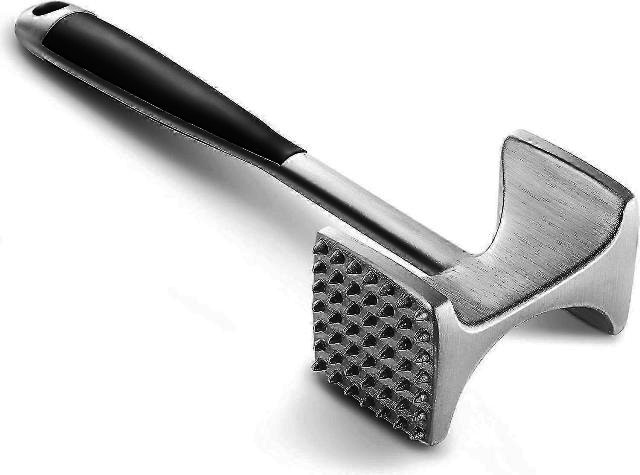 The latter is truly superior for creating ultra-thin slices without tearing the meat fibers. I found that standard meat hammers, while great for tenderizing tough cuts, tear the cutlets into submission rather than simply flattening them. A rolling pin works better. Approximately 4 by 6 inches is a nice size range to aim for, or roughly the size of your hand. Each involtino should be about three bites.
Your next step is to line them with a filling that offers a little textural and flavor variation.
The latter is truly superior for creating ultra-thin slices without tearing the meat fibers. I found that standard meat hammers, while great for tenderizing tough cuts, tear the cutlets into submission rather than simply flattening them. A rolling pin works better. Approximately 4 by 6 inches is a nice size range to aim for, or roughly the size of your hand. Each involtino should be about three bites.
Your next step is to line them with a filling that offers a little textural and flavor variation.  Paper-thin slices of Italian ham—either cooked or cured—are excellent for veal, chicken, pork, or beef. Add a thin layer of grated melting cheese: cheese first, then ham. At this point, you can add slivers of carrot and celery (I peel both), finely chopped blanched broccoli or green beans, or even lightly sautéed onions. Add salt, pepper, and chopped herbs if you have them. Then roll them up and secure the seam side with a wooden toothpick. Below is a video of Luca Pappagallo, who tightly rolls his with cling wrap and then sets them in the fridge. This is something I want to try. I used to tie them with string, but I have found that wooden toothpicks work well.
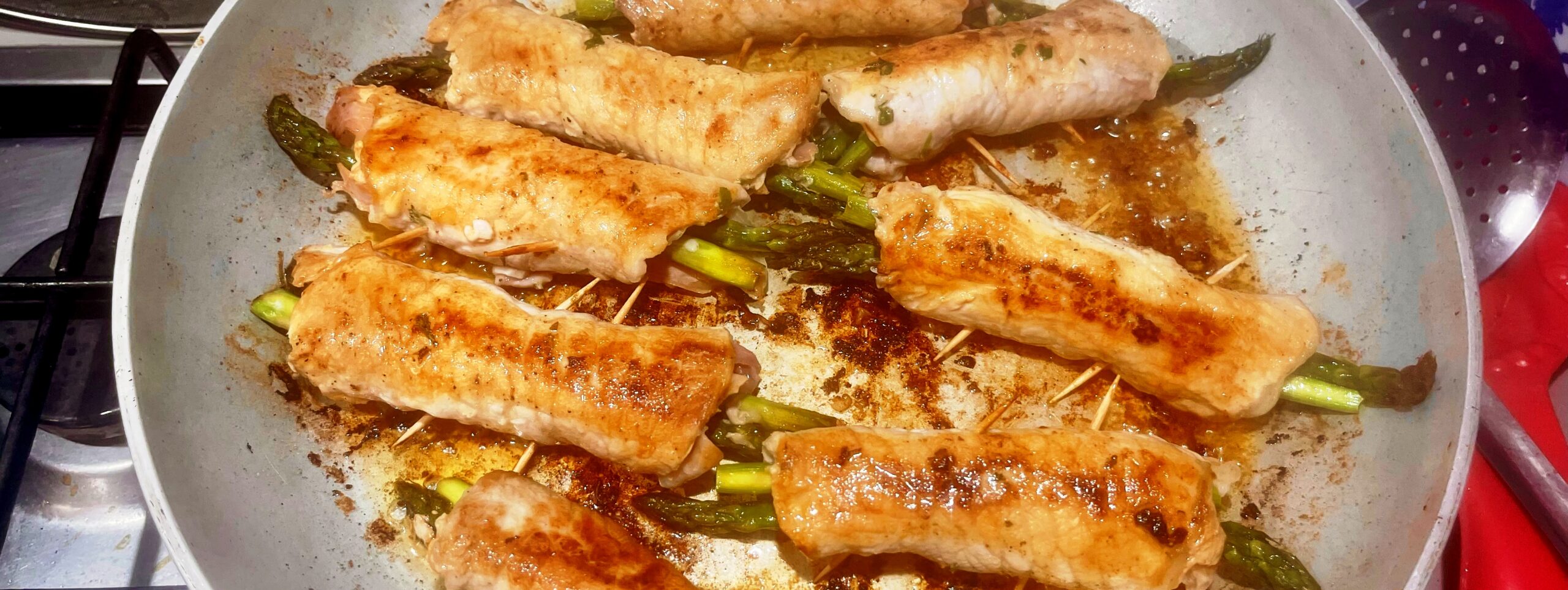
Sear them gently in a pan, rolling them over until you have a deep golden color on at least two sides. A copper frypan or aluminum pan will give an excellent golden sear, while carbon steel will give you a darker one faster. Non-stick frying surfaces slow down the searing process. Each surface will require you to learn how best to get the effect needed for even cooking.
Paper-thin slices of Italian ham—either cooked or cured—are excellent for veal, chicken, pork, or beef. Add a thin layer of grated melting cheese: cheese first, then ham. At this point, you can add slivers of carrot and celery (I peel both), finely chopped blanched broccoli or green beans, or even lightly sautéed onions. Add salt, pepper, and chopped herbs if you have them. Then roll them up and secure the seam side with a wooden toothpick. Below is a video of Luca Pappagallo, who tightly rolls his with cling wrap and then sets them in the fridge. This is something I want to try. I used to tie them with string, but I have found that wooden toothpicks work well.
Sear them gently in a pan, rolling them over until you have a deep golden color on at least two sides. A copper frypan or aluminum pan will give an excellent golden sear, while carbon steel will give you a darker one faster. Non-stick frying surfaces slow down the searing process. Each surface will require you to learn how best to get the effect needed for even cooking.
Recipe
Involtini with Ricotta filling
This can be multiplied easily – I usually serve two per person with a couple of extras, Lovely to serve in the summer.
Yield
4
Ingredients
- 8 thin pork or veal veal cutlets pounded thin
- 8 slices of prosciutto crudo
- 250 grams very drained full milk ricotta – sheep's milk is the best, but hard to find
- Fine sea salt and freshly ground pepper
- A handful of mixed herbsP chives, sage leaves, fresh thyme
- Or parsley, basil and chives finely chopped and mixed in with the ricotta
Instructions
- Lay out the cutlet, line with prosciutto,nMix the very dry ricotta in with the herbs, salt and pepper to taste
- Add a little lemon zest if you like that citrusy zing.
- Toward one end of the cutlet make a line with ricotta – about 2-3 tablespoons of filling
- Roll each one up and secure with toothpick.
- In a frypan add a film of olive oil, with about a tablespoon of butter, when the oil stops sizzling, add your involtini and fry over medium heat, turning regularly -this should take less then 10 minutes,nAdd a splash of white wine and braise for another 10 minutes at most.
- Remove from pan to serving platter or plates, Season the sauce and strain over the involtini.
- This is the perfect time to use that tiny bottle of balsamic vinegar to dot over the each serving of involtini and serve immediately, with a seasonal salad and bread.
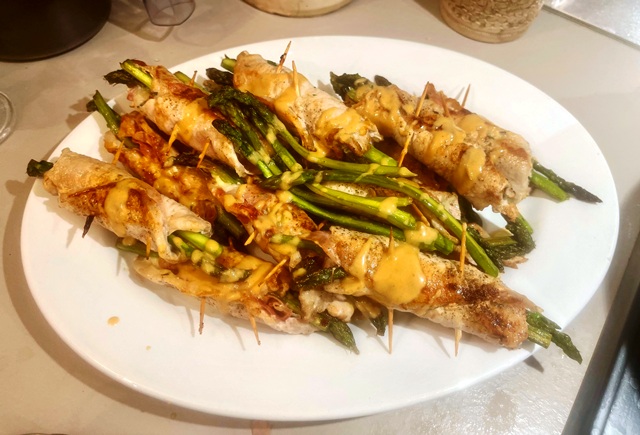
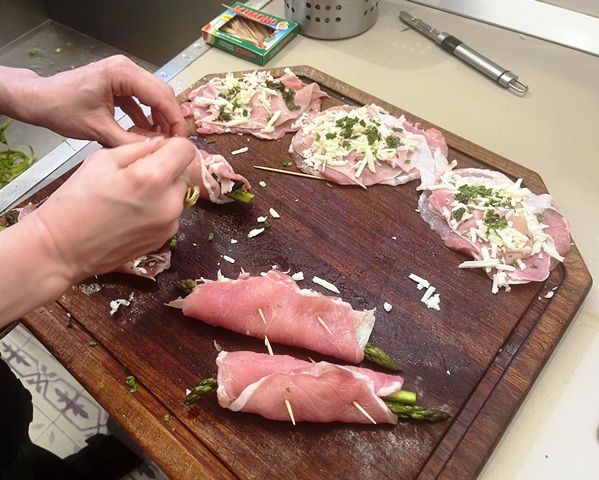 For a more elaborate dinner, this is a variation I learned from one of my favorite Italian cookbooks, published in Australia, no less. You will need two asparagus spears for each involtino, blanched for 4 minutes in boiling salted water. I always peel my asparagus and still break off the stem ends. It seems like a waste, but if you want to save them, they can be used to make an asparagus soup base; you can follow at least some of the directions in this Forager Chef video:
These involtini can be prepared about two hours ahead of sautéing and serving. A seasonal salad and an assortment of flatbreads or other local bakery breads make a great meal. For dessert, fruit and Lindsey Shere’s wonderful sugar cookies make a blissful end to a sultry evening.
For a more elaborate dinner, this is a variation I learned from one of my favorite Italian cookbooks, published in Australia, no less. You will need two asparagus spears for each involtino, blanched for 4 minutes in boiling salted water. I always peel my asparagus and still break off the stem ends. It seems like a waste, but if you want to save them, they can be used to make an asparagus soup base; you can follow at least some of the directions in this Forager Chef video:
These involtini can be prepared about two hours ahead of sautéing and serving. A seasonal salad and an assortment of flatbreads or other local bakery breads make a great meal. For dessert, fruit and Lindsey Shere’s wonderful sugar cookies make a blissful end to a sultry evening.
Recipe
Veal or Pork Involtini with Asparagus
An easy and delicious summer showstopper entree.
Ingredients
For each invlotino
- 1 pounded veal or pork cutlet no larger than your hand
- 2 blanched trimmed asparagus
- 3 – 4 tablespoons grated pecorino or asiago cheese
- 1-2 very thin slices of prosciutto crudo or cooked hamnfine sea salt and freshly ground pepper
Instructions
- Spread out each cutlet and sprinkle some of the grated cheese across, leaving the edges clean.nspread the prosciutto or ham on top.nPlace an asparagus stem with the sprouted end or tip – one facing each way – across the cernter of the fillling..nSeason with a bit of sea salt and freshly ground pepper before rolling them and securing them with a toothpick on the seam side.nAt this point you can cover them with cling wrap and refrigerate for a couple of hours.n30 minutes fefor serving, heat a frypan over medium heat with film of oilive oil and a generous tablespoon of butter – wait until the fats stop bubbling (the water in the butter is evaporating)nAd your involtini and allow them to fry on each side, turning each one regularly – you want a golden color over all sides. – this should take aabout 15-20 minutes – you can always check with an instant read thermometer – I look for 145F.nRemove the involtini to warm serving platter, and deglaze the pan with a splash of wine and stir until you have a thin sauce.nYou can add a bit of water or stock and check for seasoning – sometimes I have added a bit of butter. – and drizzle this across the top of the involtini on the serving platter.nthis is the perfect dish to use some of that astronomically priced aceto balsamico – criss cross it on top of you little bundles right before serving

Comments & Reviews