The Seed Alliance
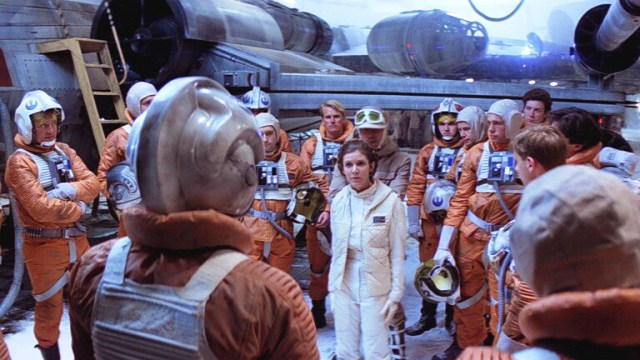
There’s a war going on that’s rarely in the news. It may be an agrarian version of Star Wars, in which a small, outnumbered group of farmers are leading the Rebel Alliance against a Galactic Empire boasting a battalion of lawyers and an endless supply of funds. That empire would be Bayer, which absorbed Monsanto; Corteva, a merger of Dow and DuPont; Syngenta, owned by ChemChina; and BASF, a quiet German mega-company housing numerous seed patents and gene-trait technologies. I was shocked to learn that these four companies control almost 60% of the world’s commercial seed supply. Usually, 40% market control sends a red alert to economists.
Farmers enter into multilayered binding contracts with these companies to literally rent seeds for a growing season. They are prohibited from replanting, seed saving, or exchange. They are contractually committed to using fertilizers and herbicides formulated only by these companies. A farmer cannot even shop for better pricing on these licensed seeds and treatments, as the giants have built price-transparency barriers. And perhaps most insidious is the “drift” from these crops, along with specially patented herbicides. The drift can ruin the unprotected harvest of a neighboring farmer. This leaves the neighboring farmer with two options: fight the corporations in court for damages to crops, or enter into the same feudal relationship with one of the big four seed monopolies.
The Big Four and How They Rule
Perhaps the only one that most of us are familiar with is Bayer. It acquired Monsanto in 2018, along with the burden of billions in U.S. Roundup lawsuits. It has quietly paid some off, aggressively litigated others, and erased the Monsanto name from its logo. Bayer’s purchase included ownership of Monsanto’s seed patents, many of them specifically engineered against insect infestations and, at the same time, resistant to patented herbicides. Bayer alone owns 25% of the global seed supply.
Syngenta is based in Switzerland, long a country noted for secrecy in financial matters and its ability to maintain neutrality in law and war. It is currently not a member of the EU or NATO. Syngenta does not release public records of its seed trials, only how well its patented seeds perform in harvest. The company has many seed patents and works with the other three giants to lock its clients into contracts that forbid seed saving, breeding, and replanting under the ironic title of a Syngenta Stewardship Agreement.
Corteva, on the other hand, is basically a merger of Dow Chemical and DuPont, with headquarters in Indiana. This company develops seeds with specific traits to produce successful crops in different environments. Seeds are coated with substances to withstand mechanized planting and maintenance, combat infestations, and enhance growth. The company works with the other three to maintain farmers’ continued dependence on their agricultural systems.
BASF is perhaps the one company you don’t read much about. Like Bayer, it is based in Germany and combines seed coatings and trait technology while protecting its seeds with specially developed herbicides. It too restricts farmers from seed saving, replanting, or even trading seeds with other farmers.
These practices are not limited to cottonseed, soy, corn, and wheat, but also extend to fruits and vegetables. 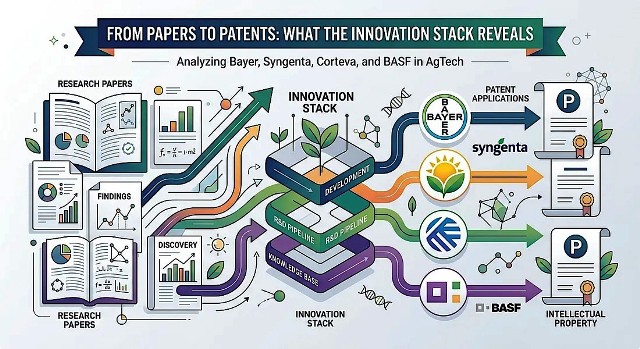 BASF controls over half the global market in lettuces and leafy greens, root vegetables, tomatoes, and cucumbers. Syngenta is a major player in the tomato industry and in pepper and cucumber crops. Bayer sold much of its seed technology to BASF (in order to conclude its purchase of Monsanto) but remains a controlling player in seed protection for the other three companies. It has also developed digital farming platforms that “guarantee” crop success. Corteva is a major U.S. agricultural crop player, with acquisitions of commercial fruit and vegetable seed producers. These companies control much of the action required to bring produce to market.
This does not mean that the seeds you buy from, let’s say, Burpee, are part of this global monopoly. Burpee is a stalwart seller of non-GMO seeds and has no commercial relation to any of the above four companies. However, its market is not the one supplying the food you buy in a grocery store; rather, it serves the home gardener and the occasional small farm. Johnny’s Selected Seeds in Maine is a reliable source for small farms and home gardens. Another Maine online source is Fedco Seeds, which has a catalog that is a reader’s delight. A side note: these catalogs sell both hybrids, which do not come true from saved seeds, as well as varieties called “heirloom” or “openly pollinated,” which can be saved. And there is the nonprofit organization in Iowa, Seed Savers Exchange, which since 1975 has led the battle for saving heirloom varieties.
Independence Starts With Seeds
This brings me back to a little group in Le Marche: Rete per l’Agricoltura Naturale, or RAN, which has 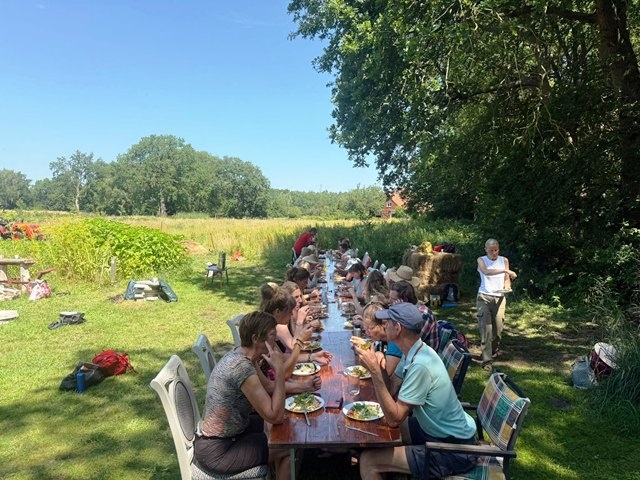 organized Casa Diffusa dei Semi to bring together not only farmers, but also agricultural researchers and seed savers to exchange and promote openly pollinated and local seed varieties—in other words, non-patented seeds. They have held workshops throughout Italy and even in the Netherlands and Spain. The EU has recently passed a new law which, according to critics, allows wider entry for GMO seeds and protection practices from these four companies.
RAN itself promotes a no-till type of farming with roots in the philosophy of Japanese farmer Masanobu Fukuoka. The group represents resistance to growing crops with edited genes and dependence on chemical fertilizers and herbicides. RAN isn’t working alone. It builds on the Rete Semi Rurali, a volunteer national network founded in 2007. RSR now links some 40 organizations and keeps a community seed bank in Florence.
There is an international seed treaty through the United Nations Food and Agriculture Organization that guarantees a farmer’s right to save, use, and exchange farm-saved seed. But the strength of these four behemoth companies is a formidable counterforce. Plus, the logical extension of the current global seed monopoly is corporate acquisition of farmland. This could prohibit communities from growing food independently. RAN, and some similar groups in the U.S. like Seed Savers Exchange, may actually be an unlikely key to crop autonomy and, in a way, help save our planet. May the force be with them.
Thank you! I didn’t even know that Monsanto was bought by Bayer. Your research on this topic is much appreciated!
Hi Deborah,
I meant also to mention the scandalous and long ddawn out lawsuit agains DuPont that was made into a remarkable film titled “Dark Waters”. It is astonishing the difference in even the European brands that get shipped over to the US, how the product is adulterated.