
There’s More Than One Vinegar
 I am currently living in what I call Fortress Balsamico. A friend visiting me in Bologna wanted my advice on a distinctive but not too extravagant Aceto Balsamico to take home—an example that would be exceptional and different from what she would find in Australia. There were simply too many bottles on the shelves screaming at us. In the end, we could not make a decision and left without a purchase.
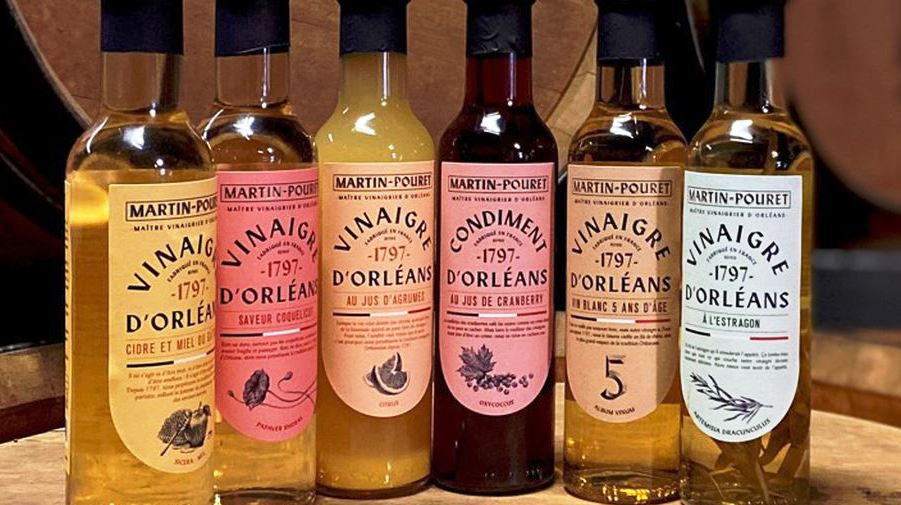
Consequently, it’s hard to find other artisanal types of vinegar here beyond the cider varieties. When La Cuisine was open, we stocked Spanish sherry vinegar, along with the vinegars from Martin Pouret in France and, of course, our favorite balsamic vinegars from Cavalli in Reggio Emilia. And we also sold some white balsamic vinegars from Acetaia Malpighi 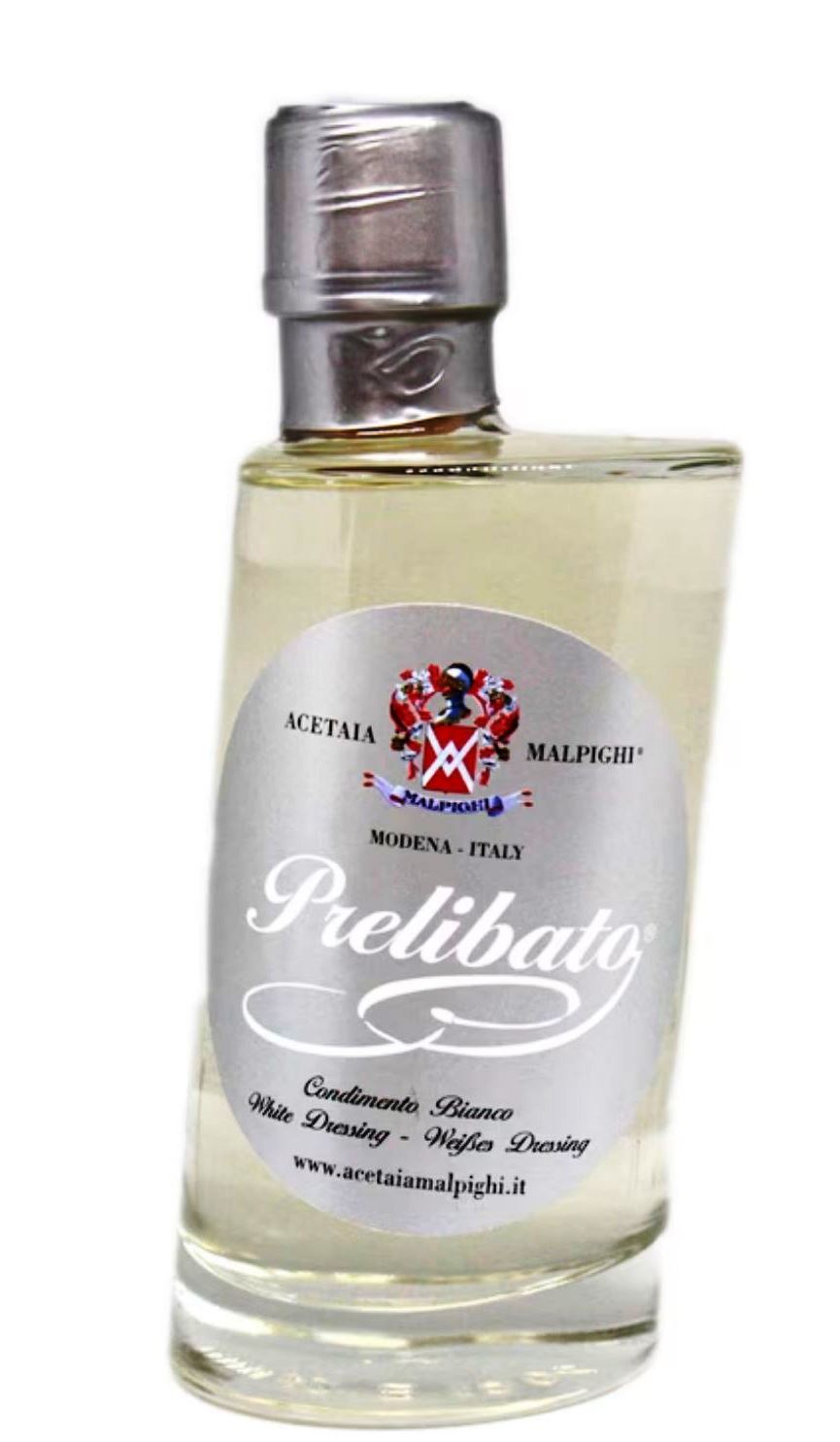 (now frequently called dressings or condimenti since there was a series of noisy flaps over the term “balsamico” used in their production).
But in all honesty, I used to reach for sherry vinegar often to brighten sauces and dressings, and in the summer it would often be my garnish for cold soups. It is modestly priced and has a dimension of flavor beyond sour—more of a deep hum than a sharp ping. It was my one purchase from Peck in last week’s adventure, where I found it neatly stacked in a small selection of vinegars offered as alternatives to the Italian anointed Balsamic Madonnas.
Sherry Vinegar to the Rescue
So what is it about sherry vinegar, a distinctly Spanish product, that I would search out to have in my tiny pantry? Its history is actually fairly recent compared to true Orléans-style vinegars and the much-publicized Italian balsamic varieties. First of all, it is derived from the unique Spanish traditions of sherry production. Sherry is produced from white grape varieties instead of red, usually Palomino, Pedro Ximénez, or Moscatel. This wine is fortified after fermentation and not during, as is done with Port. Fortifying wine is, in essence, adding brandy so that fermentation is halted and both the sugar and alcohol levels are increased. This method was originally devised to keep wine from spoiling on long journeys.
 Fortifying these wines after fermentation produces a drier wine than Port, which, in addition to being vinified from red grape varieties, is fortified during fermentation. But some barrels in both Port and sherry production would still be “off,” and the contents would be discarded. Whereas the production of balsamico has a long and almost mythic history in Italy, the development of sherry vinegar was much more recent in Spain. It was not until the 1940s that sherry vintners focused on making a stylish vinegar with these unwanted wines.
“Sherry,” by the way, is an Anglicization of Jerez, the principal city in Spain’s sherry-producing region. The area roughly forms a triangle on the map.
The production method, called the Solera System, is an intriguing concept. Picture a stack of barrels: the finished vinegar is drawn from the bottom cask, but only part of it. What’s taken out is replenished from the barrel above, and so on, all the way to the top where the youngest vinegar lives. (Solera means “on the ground,” fittingly enough.) You end up with a beautifully layered product where the old teaches the young—and vice versa. Balsamic producers and whiskey makers use variants of this aging method.
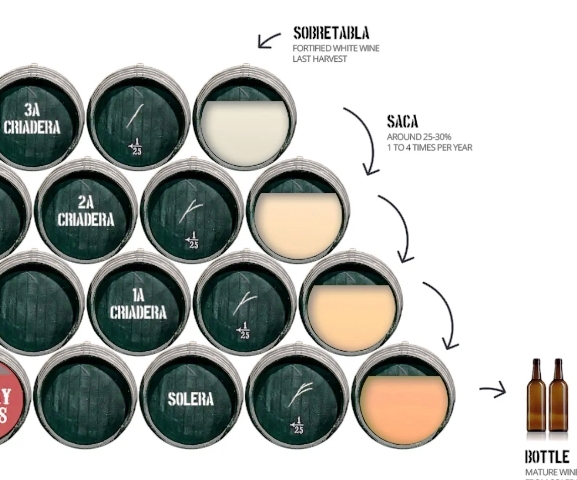
This solera method produces three different types of sherry vinegar from two vantage points—the grape used and the aging process itself. Production in Spain is regulated and protected in the EU under PDO, or Protected Designation of Origin, which enforces traditional methods and quality while prohibiting imitations made outside the awarded area. The US does not have a similar system of regulation and protection for food products, so imitations abound on our grocery shelves.
NB: You will see DOP (Denominazione di Origine Protetta) on Italian products, which is simply the Italian translation for Protected Designation of Origin.
Pick and Choose
You should note the differences in sherry vinegars that can be discerned from the label. First of all, if it is made from the Palomino grape, it will be drier and pair well with savory dishes. It’s the one I bought at Peck. If Pedro Ximénez grapes are the base, it will actually have a sweeter, more raisin-like flavor—it is great for zipping up the flavor of a reduced sauce. If the label lists Moscatel as the grape, then it will be lighter, with more ripe-fruit than dried-fruit flavor; in Spain it enhances seafood dishes. The vinegar I bought at Peck is aged only for 6 months and is good for salads and marinades. I would love to get my hands on a sherry reserva that has been aged for at least two years, as you can tell the difference when it is added to sauces. I have only tasted a sherry gran reserva at a food show. It had a flavor somewhere between caramel and dried fruit. Gran reserva sherry vinegar is aged for over ten years.
Unlike true balsamico vinegars, sherry vinegar really plays well with others. You can use it with lemon juice in a marinade, or add it to whatever green sauce is your favorite (it seems almost every Western cuisine has one). It just gives more body, more oomph. Most gazpacho recipes call for an addition of sherry vinegar, but it’s also great for potato salads and does a genuine service when added to the filling for deviled eggs.
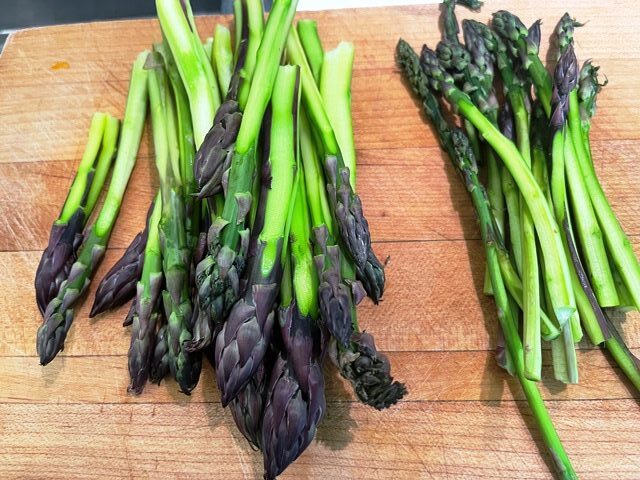 Below is a recipe for a cold asparagus soup from Ottolenghi’s cookbook Plenty, as published in 2010. I added sherry vinegar to it as a drizzle instead of the yogurt he suggests. Use the big woody asparagus for this—yes, this is a great recipe for those leftover asparagus ends—but as you know from my previous asparagus post, I always peel mine.
Recipe
Asparagus Vichyssoise
My personal variation on his cold soup using asparagus ends with a sherry vinegar drizzle. You will be surprised by the lush flavor and refreshing creamy flavor of this soup.
Ingredients
- 2 small leeks or 1 large one
- 14 oz (400 g) fat asparagus stems - peeling them will create a more delicate taste
- You can mix in frozen asparagus stalks with the fresh asparagus, saving the tips of the latter for garnish.
- 1 medium potato, peeled and diced
- 1 heaping tablespoon (20 g) butter
- 2 1/2 cups (600 ml) vegetable stock
- fine sea salt and white pepper to taste
- 1/4 cup (50 ml) cream
- 1/2 cup (100 ml) Greek yogurt
- 1 1/3 oz (40 g) samphire or use quickly blanched asparagus tips.
Instructions
- Chop off and discard the green of the leeks, cut them in half lengthways, wash, and slice.
- Cut off and discard the woody base of the asparagus, then cut into 2 cm-long pieces; keep the tips separate.
- If you break off your asparagus, there usually is a good part of it that is usable, particularly for this soup.
- In a big pan, sauté all the vegetables (leek, asparagus, potato), other than the asparagus tips and samphire, in butter for four minutes, taking care they don't color.
- Add stock and a little seasoning, bring to a boil, and simmer, lid on, for 30 minutes.
- Liquidize until smooth, fold in the cream and half the yogurt, leave to cool to room temperature, then chill.
- When you pour the cold soup into bowls, drizzle each with some sherry vinegar. Ottolenghi uses some of the yogurt as a garnish with grated lemon zest instead.
- If you have lightly steamed asparagus tips or samphire, add these to the garnish.
Notes
- He adds a bit over an ounce of samphire to his cooked asparagus. I do not as it was too salty for me, if you do that, decrease the salt in your soup, as the samphire has plenty.
- If you have some fat asparagus in the mix, save the tips, briefly cook them in some butter or steam them just until barely tender, and add as a garnish.
- Alternatively, chopped chives make a nice garnish and pair nicely with the soup and sherry vinegar.

Comments & Reviews