Road Trip Tradition
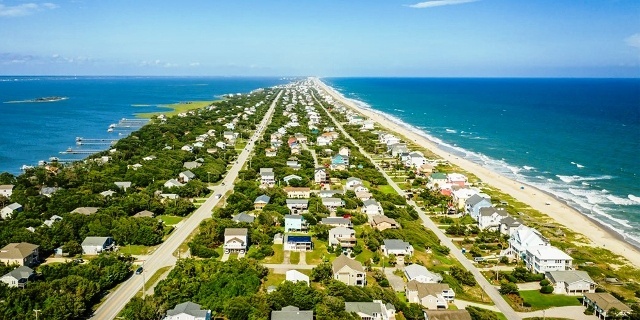 The Idle Hour in Scotland Neck, North Carolina, has been closed for several years, but it remains firmly embedded as a treasured memory for both my daughters. For many years, Emerald Isle—a glorified sandbar on the Outer Banks—was our affordable beach vacation. We would have a glorious week on the Atlantic Ocean, rip tides and all (I can’t believe that I allowed the children to swim in the sea without a lifeguard!). It boasted an amusement park and arcade that used up my children’s chore money. We could get a vacation membership to the local video store for a few dollars and watch films until the wee hours. It was there that I perfected my brownie recipe and made endless trays of chocolate chip cookies.
There were small independent shacks where you could buy excellent fresh flounder, shrimp, and  passable clams for a few dollars a pound. In fact, you could check out the competing prices by just walking a few steps between them. In one instance, my mother-in-law, while shopping for her famous avocado stuffed with shrimp salad (a recipe I have never been able to equal), was disappointed that one of the seafood shacks had shrimp for $7.00 a pound but was sold out. She walked to another where fresh shrimp were for sale at $9.00 a pound. She firmly told the seller that she could have gotten it for $7.00 a pound from his neighbor, but he was sold out. He retorted, “Lady, if I didn’t have any shrimp, my price would be $7.00 too.”
Lunch Stop
But it was a seven-hour drive from Alexandria, with daughters and friends in tow, and we always had to stop for lunch. The affordable Emerald Isle vacation lunch tradition was established by my mother-in-law who, being from North Carolina herself, had summered there since the 1930s. She in turn took her children there, and later her granddaughter and daughter, who lived with her and my father-in-law. Since the cost of summer vacations at Bethany Beach and Rehoboth (where my parents traditionally rented a house every July or August) was beyond our budget, we followed Dorothy Remington Pollard’s trail, including the lunch stop at the Idle Hour in Scotland Neck, North Carolina.
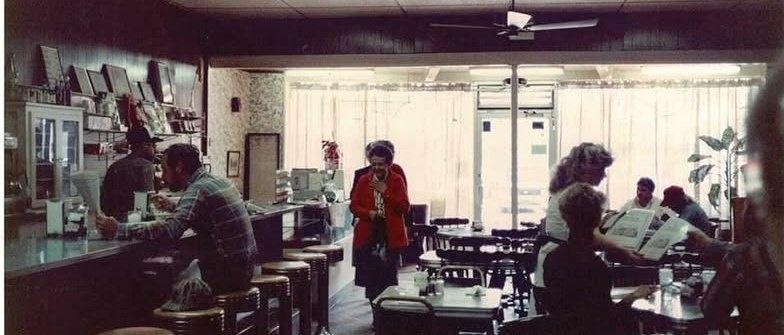
Scotland Neck was indeed founded by immigrant communities from Scotland after the Civil War. It thrived commercially due to its proximity to the Roanoke River. The Idle Hour stands empty now, and the sign has been removed. I believe only the old mosaic tile floor remains. It opened with much fanfare in 1953 but the building burned down in 2009 ( I have to thank Susan Bynum Rountree for the update) It served the kind of Southern food my father-in-law adored. He had some peculiar fixations—no tomatoes (he claimed that he had eaten a rotten tomato once in Mississippi and it had ruined the taste for him forever), and no mayonnaise, though that was never explained to me. But fried pork chops, cornbread, and iceberg lettuce (their appeal has always remained a mystery to me) were restaurant benchmarks for him. Perhaps that is why my mother-in-law sussed out the Idle Hour on her drives to Emerald Isle.
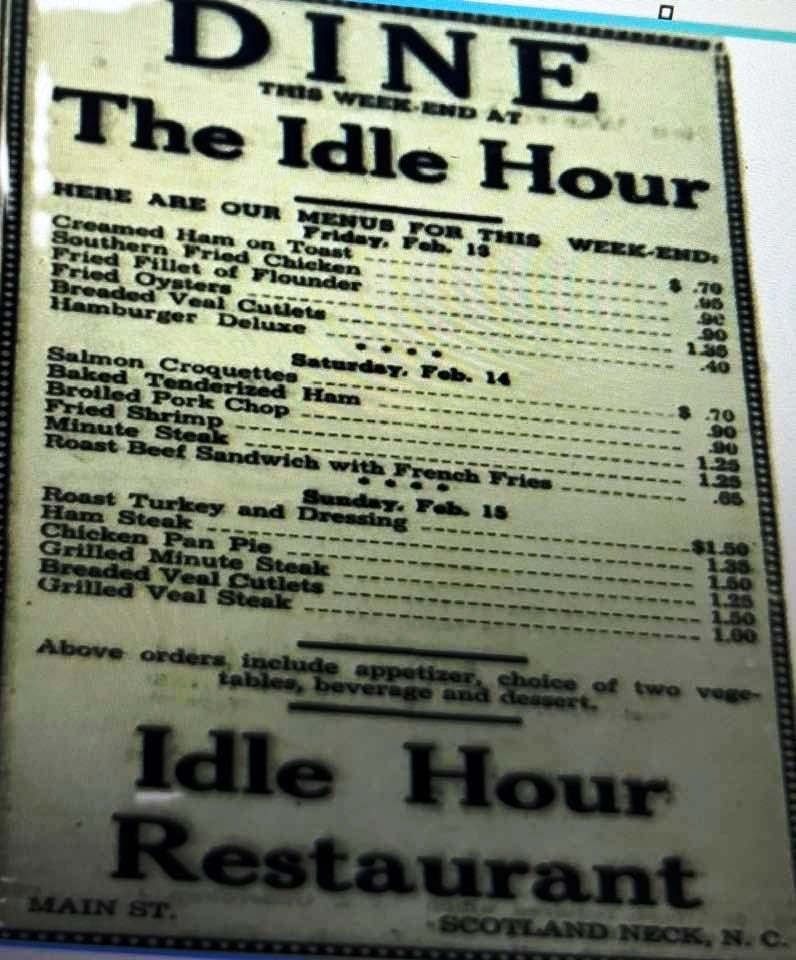 The Idle Hour changed ownership several times, but maintained its reputation for apple dumplings, lemon pie, and, particularly for us, its Parker House-style rolls. If memory serves me correctly, you had to ask for butter rather than margarine. These were similar to the delicious rolls my mother-in-law made every week. Yet another one of her recipes I have not been able to recreate satisfactorily—she always used Crisco, and I am sure the Idle Hour did too. They had somewhat leaden fried chicken, but it was infinitely preferable to KFC. My oldest daughter remembers with great fondness their yellow cake with fudge sauce and their chocolate cream pie. I still cringe at the memory of her, as a rebellious teenager, insisting on combining her glass of sweetened iced tea with Mountain Dew. I don’t remember her drinking all of it, but the color combination was alarming.
The restaurant had a gum machine on the counter and a cigarette machine on one side. It was clearly a beloved social hub for Scotland Neck residents and the surrounding farming community. My younger daughter has never forgotten that both macaroni and cheese as well as Jello were featured as vegetables and the immaculate ladies’ bathroom with its embroidered sign: If you sprinkle when you tinkle, be a sweetie and wipe the seatie.
The Idle Hour represents to me a restaurant that, while probably low in Slow Food attributes, still offered something of what Small Town USA has lost. I am amazed that Jiggers Diner in Rhode Island is still operating successfully. Like Jiggers, it might have merited a mention in Jane and Michael Stern’s Roadfood guides from the 1970s, but it probably would not make the list on Eater. Having just checked some of their North Carolina recommendations, they tend to range from pricey and trendy to astronomical. The costs of opening a small restaurant are now so daunting that we are left with clusters of corporate franchises along our highways, with poles the height of redwoods bearing their banners. I always look for signs on social media, which now serves as a sort of news outlet with loads of classifieds, hoping to see a new generation of indie restaurants cropping up, kind of like the gradual replanting of a deforested nation.

For my family, it was the Olympia Diner on route 40 on the way to the beach/Grandma’s house in NJ. It wasn’t really the diner though that had been closed for ages, it was the little burger and soft serve ice cream place next door – still Olympia. I continue driving route 40 to visit family and I was so sad when I saw it had finally permanently closed.
Hi Jennifer,
I was thinking as I wrote this piece about The Idle Hour, if some readers had a similar tradition of a paticular diner or restaurant en route to a habitual vacation place or in your case to your grandparent’s house. Thank you for sharing yours!